
Magazine
Electric car incentives for 2026 and 2027: what to expect from the support policies
The European car market is going through an extremely delicate transition period, with a gradual phasing out of internal combustion engines. To actively support drivers in this transition towards increasingly cleaner transport, governments have introduced substantial financial support measures. An analysis of the current opportunities clearly shows that the incentives for electric cars in 2026 play a key role in reducing initial costs that would otherwise be prohibitive for the average household. The central government guidelines aim to stimulate demand by offering incentives to invest in modern, zero-emission technologies. In this highly dynamic environment, it is essential to understand how much financial support is currently being provided and whether these funds are still available to the general public. Payout of the new incentives for the purchase of electric cars depends on the effective availability of public funds. Here we’ll be providing a detailed analysis of all the current rules, to make sure you do not miss out on the benefits provided for under the PNRR and its implementing decrees. Understanding these complex bureaucratic procedures is vital for secure planning of your motoring future.
An overview of the 2026 electric car incentives in Italy and what will happen in 2027
The funding allocated by the Italian government to replace older vehicles aims to encourage the renewal of the Italian vehicle fleet. The new incentives for the purchase of electric cars have been carefully designed to significantly boost registrations before the new EU regulations come into force. Many motorists are quite rightly wondering how much these incentives amount to and whether they can still apply for them. The government funding for the current year amounts to a maximum of €11,000 for those with an ISEE (Equivalent Economic Situation Indicator) of less than €30,000 for the scrapping of an old, emission-heavy car. However, these funds are no longer active for ordinary private buyers.
Those unable to purchase a new electric car still have to rely on compromise solutions. This explains why the incentives for hybrid cars in 2026 have been a huge commercial success in every region.
A large number of Italians have deliberately chosen to take advantage of the 2026 incentives for hybrid cars to travel safely over long distances without range anxiety. The general regulatory landscape is set to change radically, however, with the end of the calendar year. A look at the most recent directives shows that incentives for electric cars in Europe are set to change, to protect the continent’s complex industrial production from Asian competition. The institutions in Brussels plan to introduce strict criteria relating to the geographical origin of mechanical components. Against this backdrop of uncertainty, the incentives for electric cars in 2027 are set to be reorganised. From 1 January, there will be no traditional state subsidies available for the private purchase of a battery-powered car.
The only current exception is the reorganisation of local incentives for the purchase of electric cars approved by the Provincial Council of Bolzano on 30 October. The measures that come into force on 4 January 2027 and will remain in place for the next two years link contributions even more closely to environmental impact and income: the amount of the contributions will take into account the purchase price, applicants’ financial circumstances and the scrapping of older vehicles, where applicable. Specifically, the purchase of a zero-emission vehicle is eligible for an incentive of €2,000, which may be increased by a further €2,000 depending on the ISEE, plus an additional bonus of €2,000 for the scrapping of an older vehicle.
These specific incentives for the purchase of electric cars in 2027 apply solely to fully electric battery-powered and hydrogen-powered vehicles; hybrid cars will be completely excluded. Mopeds, motorbikes and cargo bicycles are also eligible for the scheme, in addition to grants of up to one thousand euros for the installation of home charging systems. These can be applied for through the Mycivis digital platform, as explained by the director of the Department of Infrastructure and Mobility.
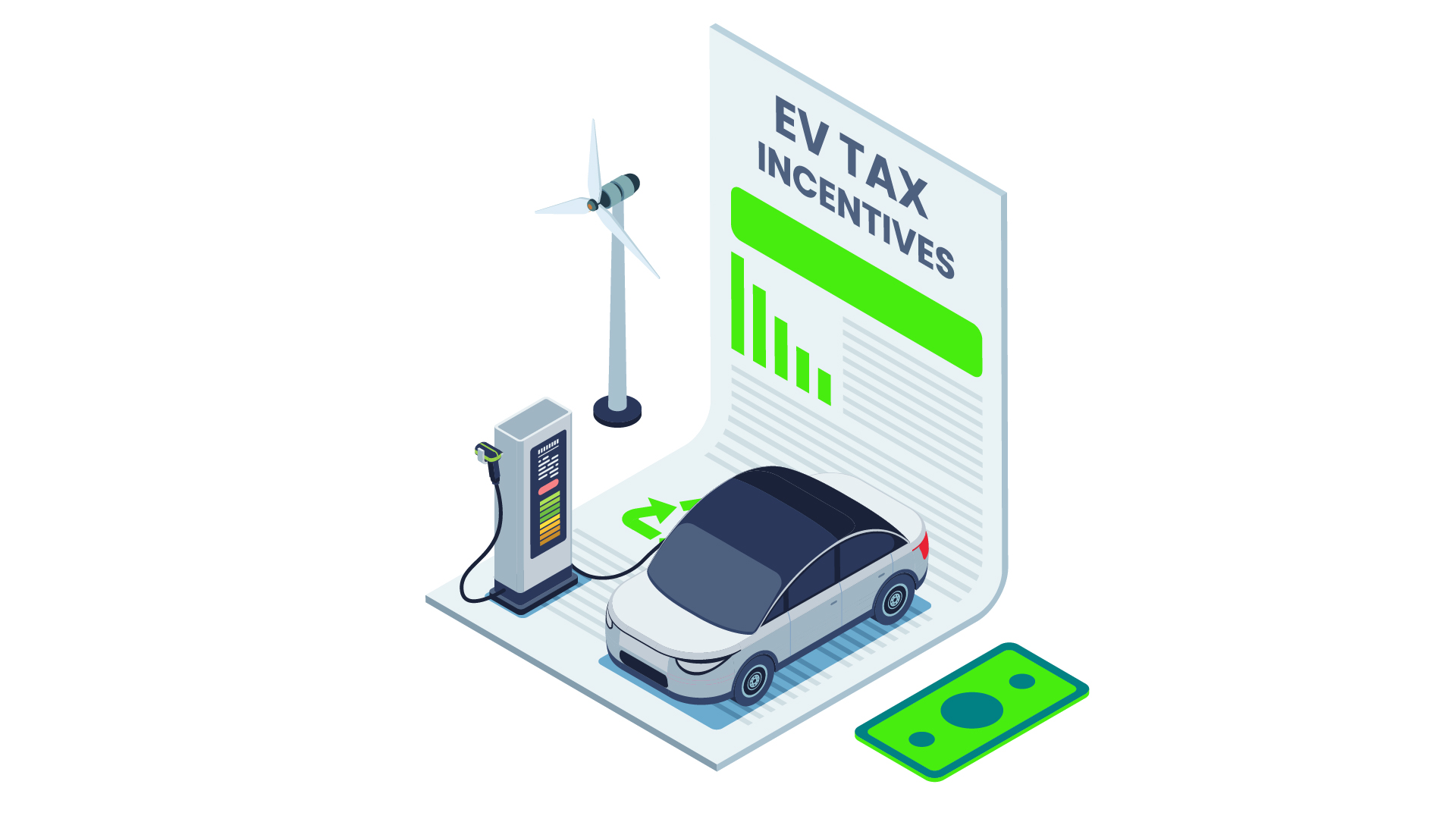
The evolution of bonuses and incentives in the European context moving forward
The strong green push being promoted by the European Union sets very tight deadlines for reducing air pollution levels. Given these strict environmental requirements, the bonuses and incentives for buying electric cars have offered an unmissable opportunity to purchase a zero-emission vehicle. But what exactly will happen next year? From 1 January, purchase subsidies will be suspended, and a new fund of three thousand euros will be earmarked exclusively for the purchase of battery-powered motorbikes and scooters. The only real form of public support for cars will be an innovative social car-hire scheme costing one hundred euros a month, aimed at those on low incomes.
At the same time, however, work is in progress on other aspects, such as the expansion of local infrastructure throughout the country. This vast electricity distribution network is essential for ensuring long, safe journeys from one end of Italy to the other. Today’s drivers constantly need ultra-fast charging points so they can recharge their batteries in just a few minutes. The ongoing roll-out of new fast charging points is crucial for reassuring less experienced users. The creation of a fully independent supply chain will help strengthen the economy, and new incentives for the purchase of electric cars will be introduced to bolster the ecological transition. In the not-too-distant future, governments will only provide subsidies to those car manufacturers with the courage to invest capital in assembling their vehicles on European soil.
Eligibility criteria, income brackets and how to apply for grants towards the purchase of electric cars
Disbursement of the generous government support for 2026 follows very precise rules based on strict income thresholds and designed to benefit those with the lowest incomes. The discount at the dealership is calculated based on the figure stated on the household’s ISEE certificate. This means public subsidies will help to meet the real need for eco-friendly transport. The much-sought-after bonus for electric cars sets a maximum spending limit of €35,000 for the new vehicle, not including the standard VAT rate of 22%.
For complete clarity regarding the requirements set by the Ministry, the various eligibility categories for this year’s generous subsidies can be summarised as follows:
Individuals with an ISEE of less than €30,000 are eligible to receive the maximum amount of support available from central government to promote environmental sustainability.
– For the scrapping of an old, high-emission vehicle, the household receives a one-off government grant of €11,000 net
– An ISEE of between €30,000 and €40,000 entitles the holder to a substantial cash contribution of €9,000 when they scrap an old car
– Second-hand cars to be scrapped must be registered in the name of the applicant or a family member who has been living with them for at least twelve months
– If an obsolete vehicle is not scrapped, the state subsidies are reduced proportionally in accordance with the law
All the financial restrictions on expenditure are intended solely to prevent the misuse of public money to fund ultra-luxury cars that are clearly at odds with the spirit of the measure.
How to submit an application for the 2026 electric car incentives through the Ministry platform
The IT procedure designed to promptly freeze government funds saves users from having to wrestle with red tape, and is managed entirely by authorised vendors. As soon as the motorist signs the contract, the dealership must act very swiftly on the online platform of the Ministry. In a matter of seconds, this essential portal of the Ministry of Enterprises and Made in Italy verifies the effective availability of the funds and authorises the commercial transaction by generating an important official booking document in digital format.
Unfortunately, at present, the funds earmarked for private individuals have run out, but members of the public are eagerly awaiting news of when the new programmes for next year will come into effect. The only measures on the way regard the monthly social rental scheme we mentioned earlier, reserved for those with a low ISEE. Applications for this new type of support are not yet open, and the portal managed by ACI (Automobile Club of Italy) is currently being finalised. To retain the legal entitlement to state aid, the car must be formally registered within a few months of the issue date of the official booking.
2027 is a blank page as yet with regard to incentives for the purchase of electric cars. Our advice is to keep up to date with the latest legislative developments. Our collective hope rests entirely on the commendable efforts of the major car manufacturers, who will need to drastically reduce their operating costs to make eco-friendly driving truly accessible.
Read also
Information is energy for the mind. Explore articles, offers, and news dedicated to the world of electric mobility and stay up-to-date on everything IPlanet.
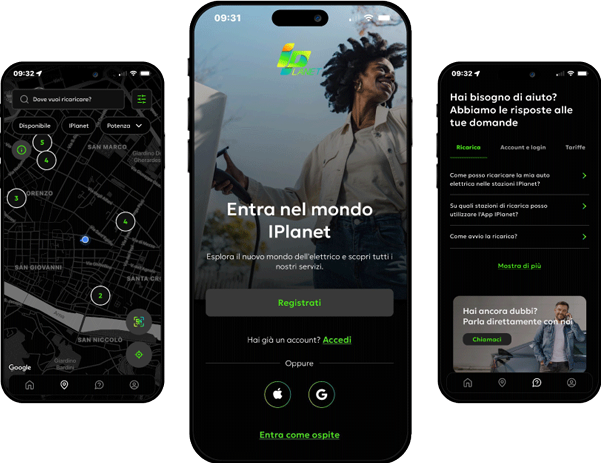
Download our App
Did you know? Keep everything under control with IPlanet. Find easily your nearest stations, start charging, monitor your consumption in real time and manage your payments. Electric mobility has never been so easy.
Find out more
Electric mobility, everywhere.
IPlanet offers you a complete ecosystem of online and offline services to simplify travel. EV charging points, traditional fuel pumps and refreshment areas: every last detail has been designed to guarantee you a complete experience. Control everything at a click on our App and website!
Find our more
Iplanet. The ultrafast solution to your charging needs

Find your nearest charging point
Use our ultrafast charging points and dedicate more time to the things you love.

Pay directly from the App
Start charging from your smartphone to save time and money

Benefits and deals
Follow our channels to discover more promotions just for you.
Our Energy
is 100% Renewable
IPlanet certifies the origin of all the energy supplied by its ultra-fast charging stations. In 2024, we received a Cancellation Statement from the Energy Services Manager (GSE), confirming the cancellation of 260 Guarantees of Origin, equivalent to 260 MWh of renewable energy used.
