
Magazine
An electric car pays off: discover the benefits and long-term savings
Choosing a car is always a matter of balance between performance, comfort, efficiency and… money. The best car is the one that combines and balances these aspects in a way that suits our tastes. When it comes to finances, the advent of the electric car poses the most classic of questions for motorists. It looks good. It’s kind to the environment. But does it really pay off? The answer, whichever way you look at it, is definitely yes. Understanding how and why the electric car makes financial sense compared to the classic, traditional car that runs on petrol or diesel is the very first step towards weighing up an investment that has an extremely positive impact on the household or company budget in the long term.
In addition to the undeniable purely ecological aspect and respect for the quality of the air we breathe, the inherent efficiency of modern battery-powered engines offers a drastic reduction in daily expenses. This is why it is important to analyse all the expenses that revolve around running a car, in detail and in depth, demonstrating with concrete data how zero-emission mobility is not only an ethical choice, but also a shrewd financial move.
Why electric car charging pays off: saving on fuel and maintenance costs compared to conventional vehicles
The first, most immediate and perhaps most obvious saving from using a battery-powered vehicle regards the cost of the energy needed to move it. When we begin to seriously analyse the subject of electric car fuel consumption, it becomes glaringly obvious that the thermodynamic efficiency of an electric engine is far superior to that of a conventional internal combustion engine. To understand this difference, it’s sufficient to consider that a state-of-the-art petrol or diesel engine only converts about 20-30% of the energy contained in the fuel into actual movement; all the rest is literally wasted and dispersed in the form of heat and friction. An electric motor, in contrast, easily exceeds 80-90% energy efficiency.
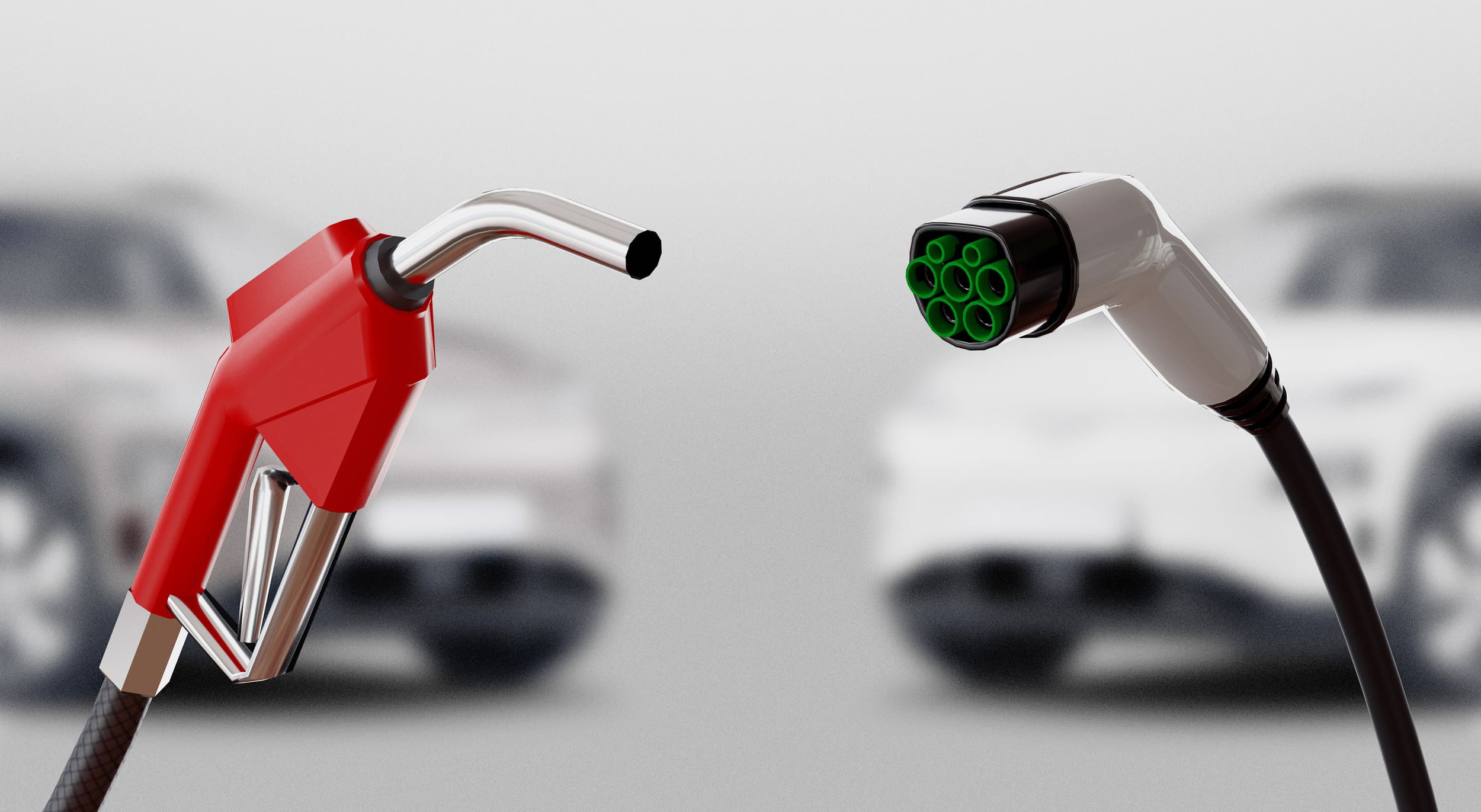
The result of this incredible technical optimisation is an extraordinarily low cost per kilometre travelled. Charging your car, either with a domestic wallbox that recharges it during the night, or by using the columns, allows much more stable planning of costs than the continuous, unpredictable fluctuations in oil prices. By choosing reliable suppliers such as IPlanet that offer integrated mobility solutions, energy costs can be reduced even further.
Fuel is not the only item of expenditure that can be cut significantly. The routine and extraordinary maintenance of an electric vehicle is much simpler than that of a conventional car. A thermal car is composed of thousands of complex moving parts, whereas an electric car has an extremely minimal mechanical architecture. There are no spark plugs to replace, no engine oil to change every year, no fuel filters, no timing belt, no clutch, no exhaust pipe and no complex exhaust gas filter system.
In addition, the braking system enjoys unrivalled longevity. Thanks to the innovative regenerative braking system, the electric motor reverses its operation during deceleration, acting as a generator that slows the vehicle down and recharges the battery at the same time. This process minimises mechanical friction, allowing brake pads and discs to last up to twice, if not three times, as long as a normal car. Periodic workshop checks are often limited to checking the windscreen washer fluid, replacing the passenger compartment pollen filter and a quick computer check on the health of the battery and tyres.
If we objectively and carefully weigh up every single technical aspect of the pros and cons of an electric car, the scales weigh heavily in favour of the financial benefits of running the vehicle over the years.
When and how electric car charging pays off in the city
The advantages are even greater if we consider use in towns and cities. In stop-and-go traffic, an internal combustion engine consumes and pollutes very significantly, while the electric motor maximises energy recovery during braking. It is precisely in the hectic streets of the city that electric car charging makes most financial sense, effectively reducing to zero the energy wastage typical of queues at traffic lights, where the electric motor simply shuts down without consuming anything.
Tax advantages and incentives for buying an electric car
It is undeniable that the list price for the initial purchase of a zero-emission car today is higher on average for battery-powered models than for their combustion counterparts. However, to encourage the ecological transition, the Italian central government and the various regional and local administrations periodically intervene to bridge this gap, providing motorists with a series of highly significant structural tax breaks and financial contributions.
One of the basic pillars of long-term savings, which has a significant impact on annual fixed expenses, is the total exemption from road tax. In the vast majority of Italian regions, owners of electric vehicles are completely exempt from paying road tax for the first five years from the date of first registration. At the end of this free five-year period, the tax payable is still only a quarter of the amount normally charged for corresponding petrol vehicles. In some specific, particularly virtuous regions, such as Lombardy and Piedmont, the exemption from paying road tax is even permanent for the entire useful life of the vehicle.
Adding to this huge saving on ownership taxes are the substantial national incentive schemes, commonly known as Ecobonus, promoted by the government to modernise the fleet of cars on the road (which is among the oldest in Europe) and drastically reduce greenhouse gas emissions. To carefully monitor the availability of state funds, emission brackets and the deadlines for implementing decrees, it’s essential to consult the government portal dedicated to bonuses and incentives, which provides a clear, transparent overview of the requirements for accessing bonuses and incentives that can amount to several thousand euros, especially if you scrap an old polluting vehicle.
Another aspect that is often underestimated is insurance costs. The insurance world also rewards green choices: companies very frequently offer reduced third-party motor liability rates, with discounts ranging from 10% up to 30-40% for electric vehicles. This is because insurance companies consider these cars statistically less prone to serious accidents, both because of the massive presence of advanced driver assistance systems and because they are driven by a target group of drivers who tend to be more cautious and careful at the wheel. As a result, when we weigh up the advantages and disadvantages of the electric car, the economic barriers to purchase are significantly lowered by extremely favourable taxation, which amortises the initial expenditure in a short time.
Access to ZTL (Limited Traffic Zones) and parking costs: the freedom of e-mobility
A further, fundamental competitive factor that weighs heavily on the pockets of those who live, work or regularly travel in large towns and cities regards the complex management of parking and regulated transit. Major Italian and European cities are introducing increasingly strict restrictions on internal combustion vehicles (think of Area B or Area C in Milan, or the strict Green Zones in Rome), while rolling out the red carpet for zero-emission mobility, with preferential lanes and direct economic advantages.

Unrestricted access to the ZTL, without having to pay for daily tickets or very expensive annual passes represents a saving that is sometimes ‘invisible’, but no less impressive, especially for professionals, representatives or anyone who has to constantly move around the historical and commercial heart of the city for work. Conventional petrol or diesel vehicles are excluded from these areas, or forced to pay high duties, while the electric car gets a free pass.
Similarly, the total or partial exemption from paying for parking on blue lines is very much a game-changer. In most areas in Italy, all electric car drivers have to do is register their plate, and they can then park free of charge on the blue lines. This eliminates a fixed expense that in large cities can easily amount to hundreds of euros every single month. In addition, during driving bans imposed when smog levels are high, electric cars are the only ones that are always allowed on the road.
Electric car drivers quickly get used to this new level of urban freedom. To travel with complete peace of mind and improve electrical car consumption figures even when organising longer trips, it’s a good idea to use leading-edge charging station mapping. Planning your stops not only allows you to say goodbye to ‘charging anxiety’, but also to optimise your journey time.
Why it really pays to take the plunge
Comparing two such different mobility systems requires a pragmatic overview that goes well beyond just reading the list price at the dealership. When we carefully examine all the hidden expense items in the long term, and cross-reference them with zero ownership tax, remarkably low insurance costs, free city parking and virtually non-existent mechanical maintenance, the irrefutable mathematical fact is that Total Cost of Ownership leans in favour of battery technology.
The break-even point, compared to a conventional car, is reached much earlier than widespread scepticism suggests, and usually within the first three or four years of use, especially for drivers with medium to high annual mileage. It is essential to understand whether electric car charging is also worthwhile in your specific case, perhaps by relying on new-generation energy services that can provide subsidised rates and custom subscriptions to further reduce the cost per kWh.
When we sum up and weigh up the pros and cons of the electric car, it is clear that technological evolution is erasing the limitations of the past. The batteries last much longer, provide ranges in excess of 400 real kilometres and are recharging faster and faster. In the vast scenario of the advantages and disadvantages of electric cars, the elements in their favour are now clearly predominant. Choosing electric mobility is no longer a gamble for technology pioneers; it’s the most logical, economically flexible and safest bet for the wallet of forward-looking motorists.
Read also
Information is energy for the mind. Explore articles, offers, and news dedicated to the world of electric mobility and stay up-to-date on everything IPlanet.

Download our App
Did you know? Keep everything under control with IPlanet. Find easily your nearest stations, start charging, monitor your consumption in real time and manage your payments. Electric mobility has never been so easy.
Find out more
Electric mobility, everywhere.
IPlanet offers you a complete ecosystem of online and offline services to simplify travel. EV charging points, traditional fuel pumps and refreshment areas: every last detail has been designed to guarantee you a complete experience. Control everything at a click on our App and website!
Find our more
Iplanet. The ultrafast solution to your charging needs

Find your nearest charging point
Use our ultrafast charging points and dedicate more time to the things you love.

Pay directly from the App
Start charging from your smartphone to save time and money
Benefits and deals
Follow our channels to discover more promotions just for you.
Our Energy
is 100% Renewable
IPlanet certifies the origin of all the energy supplied by its ultra-fast charging stations. In 2024, we received a Cancellation Statement from the Energy Services Manager (GSE), confirming the cancellation of 260 Guarantees of Origin, equivalent to 260 MWh of renewable energy used.
