
Magazine
The future of electric cars: technological innovations and environmental challenges
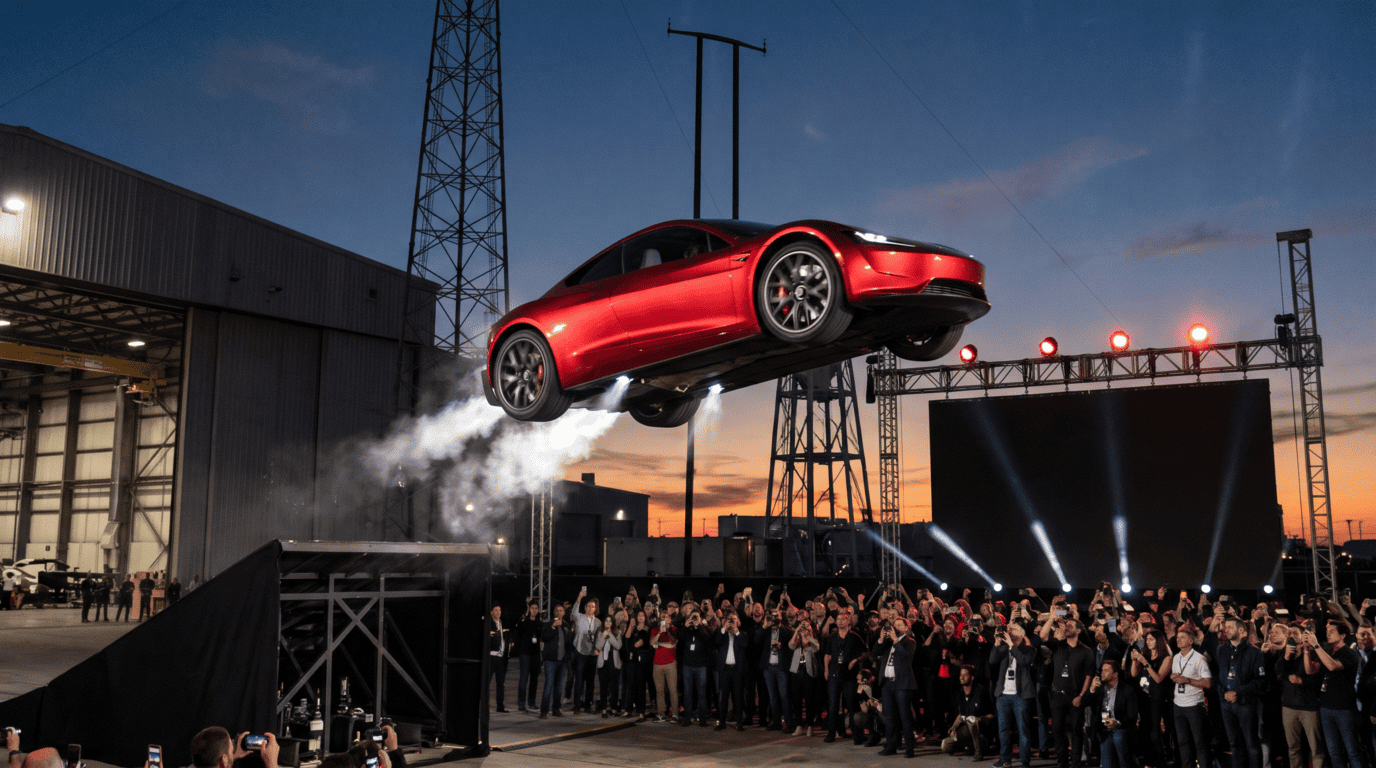
With a mix of amazement and amusement, the world has just witnessed the unveiling of the new flying electric car designed by Elon Musk and his company. The media event has sparked mixed reactions among both experts and the general public. As a prototype able to lift off using cold-gas thrusters derived from the aerospace sector was being demonstrated on stage, many observers wondered whether this really is the top engineering priority.
Doubts naturally arise when we’re faced with science-fiction-like promises that are undoubtedly no more important than the real obstacles currently standing in the way of the ecological transition.
At least for the moment, the future of electric cars may not lie so much in flights of fancy as in the practical resolution of real-world problems associated with everyday use. The most important of these are unquestionably the need to increase effective range, drastically reduce charging times, and how to handle the complex end-of-life process for the various components of vehicles.
Today, smart mobility requires a pragmatic approach that always prioritises accessibility and mass sustainability. As we wait to see whether cars will really fly in 2028, global scientific research is focusing on rather different challenges. The most pressing technological innovations regard the complex chemistry of batteries, a field in which recent studies have shown significant progress, but also a healthy dose of realism. Leaving science fiction aside for a moment, an objective analysis of the current state of the art is key to understanding exactly where the global automotive industry is heading.
The future of electric cars and the evolution of solid-state batteries
When it comes to pure innovation, our thoughts immediately turn to solid-state batteries, long regarded as the Holy Grail of the entire industry. However, the in-depth reports and market analyses published in recent months oblige us to set the record straight, distinguishing commercial hopes from the harsh engineering reality. At present, there are no authentic solid-state batteries on the market mass-produced for the global automotive sector, and what we are actually witnessing is the commercial launch of semi-solid-state solutions. These cells still retain a small percentage of liquid electrolyte, while ensuring a significant increase in energy density and greater intrinsic safety compared with traditional lithium-ion cells. Several Asian companies have successfully launched their first pilot production lines, but production yields and manufacturing costs clearly show that perfecting the process is still a long way off. The actual future of electric cars will depend almost entirely on the structural capacity to scale up these new technologies and thus cut manufacturing costs. The most recent and authoritative estimates suggest that fully solid-state batteries will not be available in top-of-the-range models until at least the end of this decade. Meanwhile, the major manufacturers are refining hybrid architectures that easily exceed 350 Wh per kilogram, a figure that enables a significant increase in real-world range.
This delicate transition phase is crucial to winning over the large slice of consumers still held back by range anxiety. The ability to effectively travel significantly longer distances on a single charge is very much a crucial factor for the mass adoption of vehicles with zero emissions. Chemical efficiency is not, however, the only factor at play: a battery pack with an extremely high capacity is no use if it cannot be recharged quickly.
This is why university research is focusing on rapidly reducing the internal resistance of the cells, a thermodynamic flaw typical of solid materials that severely hinders the flow of ions during repeated cycles of high-power recharging. Eliminating this physical and mechanical bottleneck means being able to restore 80 per cent of the rated capacity in just over 10 minutes.
Developing the network for the future of electric cars and ultra-fast charging
A vast fleet consisting entirely of vehicles able to absorb immense amounts of electrical power requires an infrastructure ecosystem perfectly up to the task. Sadly, without a truly extensive and efficient distribution network, even the finest mechanical inventions remain confined to the laboratories. The systematic roll-out of charging points across the country and throughout Europe is the second major pillar of the transition. In an authentically sustainable city of the future, access to energy must necessarily be democratic, widespread and completely invisible, blending seamlessly into the delicate urban fabric and the daily routines of its citizens. The rapid proliferation of modern high-capacity fuel dispensers along major motorways is slowly but surely closing the logistical gap with traditional petrol stations.
The real test is inevitably shifting to local distribution networks, which must be modernised as a matter of urgency to cope with the alarming peaks in simultaneous demand. The widespread roll-out of smart grids is the engineering and systemic response to this enormous collective challenge. Pioneering bidirectional charging technologies enable cars to feed energy back into the grid at critical times of peak demand, effectively transforming private vehicles into huge, invaluable mobile batteries. This continuous and virtuous exchange of electrical flows is the very essence of the grid designed for the new, advanced smart mobility, a revolutionary concept that extends far beyond simply travelling from A to B, dynamically encompassing the entire energy management of the community.
The substantial financial investments envisaged in recent government plans aim to increase the density of charging points even in the most remote areas, to prevent eco-friendly transport from becoming an élite privilege confined exclusively to city centres. Forward-thinking and profoundly inclusive urban planning is vital to ensure equitable access to new forms of mobility, while at the same time reducing the visual and spatial impact of the technological infrastructures required.
Infrastructure and the vision for a sustainable city of the future
Envisioning the major urban centres of the coming decades requires a radical rethink of the day-to-day interaction between transport and the surrounding environment. In this unprecedented, highly interconnected landscape, the ordinary private car is destined to lose its traditional status as an isolated vehicle, and to become an active node in a far more complex and responsive network. The true sustainable city of the future will not simply replace old exhaust pipes with quiet battery-powered engines, but boldly redesign public spaces to encourage sharing and full intermodality. The question of the energy source best suited to actively drive this structural revolution is constantly being raised in heated economic debates. The complex media debate is often all too sharply polarised around the future of electric or hydrogen-powered cars, almost as if these two viable technologies were tragically destined to cancel each other out on the free market, while the most recent engineering applications actually openly suggest a strategy of coexistence, strictly based on the specific operational requirements of the transport sector.
While high-capacity batteries remain by far the best choice for light-duty transport and predominantly urban daily journeys, complex fuel cells are best suited to the demanding heavy goods transport sector and very long distances across continents. Green hydrogen can act as an excellent stabiliser for the entire national electricity grid, effectively absorbing the large surpluses of electricity generated by non-dispatchable renewable sources such as wind and solar power. The creation of innovative and efficient local ecosystems in which energy is produced, stored and consumed locally represents a genuinely groundbreaking paradigm shift. Modern, large-scale service stations will inevitably have to evolve into fully-fledged multifunctional energy hubs able to supply high-power electricity and highly compressed hydrogen molecules, while simultaneously offering advanced services to the numerous travellers passing through.

Environmental challenges facing electric and hydrogen-powered cars
The complex path towards complete decarbonisation is fraught with numerous environmental obstacles that policy-makers absolutely cannot ignore. Any careful and thorough assessment of the future of electric cars must inevitably take into account the massive environmental impact caused by the global extraction and production chain. The imminent and rapid ecological transition has shifted long-standing geopolitical dependence on traditional fossil fuels towards new and highly sought-after critical minerals, such as lithium, cobalt, nickel and rare earth elements in general. The continuous, large-scale mining of these precious resources very often takes a heavy ecological toll in terms of excessive water consumption, widespread deforestation and chronic pollution of underground aquifers, raising extremely serious ethical and environmental concerns, especially in vulnerable developing countries. To actively mitigate these clearly negative and harmful effects, the modern chemical industry is exploring new basic combinations that do not rely on critical materials, such as the increasingly widespread lithium iron phosphate batteries or the promising, innovative sodium-ion batteries, which promise significantly lower costs and a reduced environmental impact associated with the complex mining process. Furthermore, the crucial and imminent challenge of recycling is now of vital importance, to say the least. The circular economy must quickly become the absolute norm rather than the usual laudable exception, ensuring the almost total and complete recovery of the precious metals originally contained within heavy end-of-life cells. The strict guidelines issued by the Ministry of the Environment and Energy Security, as well as the increasingly complex European regulations, impose increasingly stringent and rigorous recovery rates on large manufacturing companies. The creation of a modern, extensive and efficient recycling network across the continent not only drastically reduces the environmental footprint of private transport, but also ensures a significantly more secure industrial supply, finally freeing the delicate automotive sector from its risky dependence on unstable third countries.
Future scenarios
To carefully and objectively weigh up the pros and cons of future electric or hydrogen cars, it is imperative to take into account the entire, complex life cycle of the various energy carriers. The complex and costly production of green hydrogen requires enormous quantities of electricity from purely renewable sources and an equally large amount of fresh water, while the inevitable losses in technical efficiency along the complex compression and transport chain severely limit its current economic viability. On the other hand, the mass production of huge, heavy battery packs has a significant initial carbon footprint – a heavy burden that each individual car must offset by travelling several tens of thousands of kilometres on the road. A thoroughly holistic, scientifically rigorous approach is essential to guide policy-makers and end consumers towards practical choices that are truly sustainable in the long term. The great challenge of our time is not just about replacing one type of polluting engine with another. It requires us to build a completely new and multifaceted system of integrated transport that faithfully respects the delicate balance of our precious biosphere, while tangibly improving quality of life for all the inhabitants of our beautiful planet. Unprecedented international cooperation will be the only way to turn this ambitious vision into a solid, tangible, everyday reality for countless generations to come.
Read also
Information is energy for the mind. Explore articles, offers, and news dedicated to the world of electric mobility and stay up-to-date on everything IPlanet.

Download our App
Did you know? Keep everything under control with IPlanet. Find easily your nearest stations, start charging, monitor your consumption in real time and manage your payments. Electric mobility has never been so easy.
Find out more
Electric mobility, everywhere.
IPlanet offers you a complete ecosystem of online and offline services to simplify travel. EV charging points, traditional fuel pumps and refreshment areas: every last detail has been designed to guarantee you a complete experience. Control everything at a click on our App and website!
Find our more
Iplanet. The ultrafast solution to your charging needs

Find your nearest charging point
Use our ultrafast charging points and dedicate more time to the things you love.

Pay directly from the App
Start charging from your smartphone to save time and money

Benefits and deals
Follow our channels to discover more promotions just for you.
Our Energy
is 100% Renewable
IPlanet certifies the origin of all the energy supplied by its ultra-fast charging stations. In 2024, we received a Cancellation Statement from the Energy Services Manager (GSE), confirming the cancellation of 260 Guarantees of Origin, equivalent to 260 MWh of renewable energy used.
