
Magazine
Electric cars and their environmental impact: a guide to a more sustainable world
What is the environmental impact of an electric car? How much pollution does it cause? How does it contribute to sustainability? These are just some of the questions motorists ask Google on the environmental impact of electric cars. A clear understanding is a crucial step towards grasping the tangible benefits this technology offers for our ecosystem. Battery-powered vehicles represent a practical and effective solution, forming part of a structured strategy to improve air quality in urban centres and beyond. Choosing electric mobility means supporting an efficiency-based development model, in which the need to transport people and goods is aligned with international decarbonisation targets and the directives and strategic objectives promoted by the Ministry of the Environment and Energy Security.
The contribution of charging and renewable energy to sustainability
When analysing zero-emission mobility, vehicles are just one element in a wider system. The environmental benefit becomes effective when electric propulsion is combined with energy generation from renewable sources. Solar, wind and hydroelectric power are transforming the energy supply for transport. The use of energy generated from clean sources to power vehicles eliminates climate-changing emissions associated with the charging phase, consolidating a transport model based on real energy and environmental sustainability.
Today’s electricity grids, integrated with digital management systems (smart grids), are designed to efficiently balance and distribute the energy generated from renewable sources. Through the development of Vehicle-to-Grid technology, battery-powered cars become flexible energy resources. When parked, cars can exchange the energy stored in their batteries with the national electricity grid, helping to stabilise loads and providing practical support for managing peaks in energy demand across the whole community.
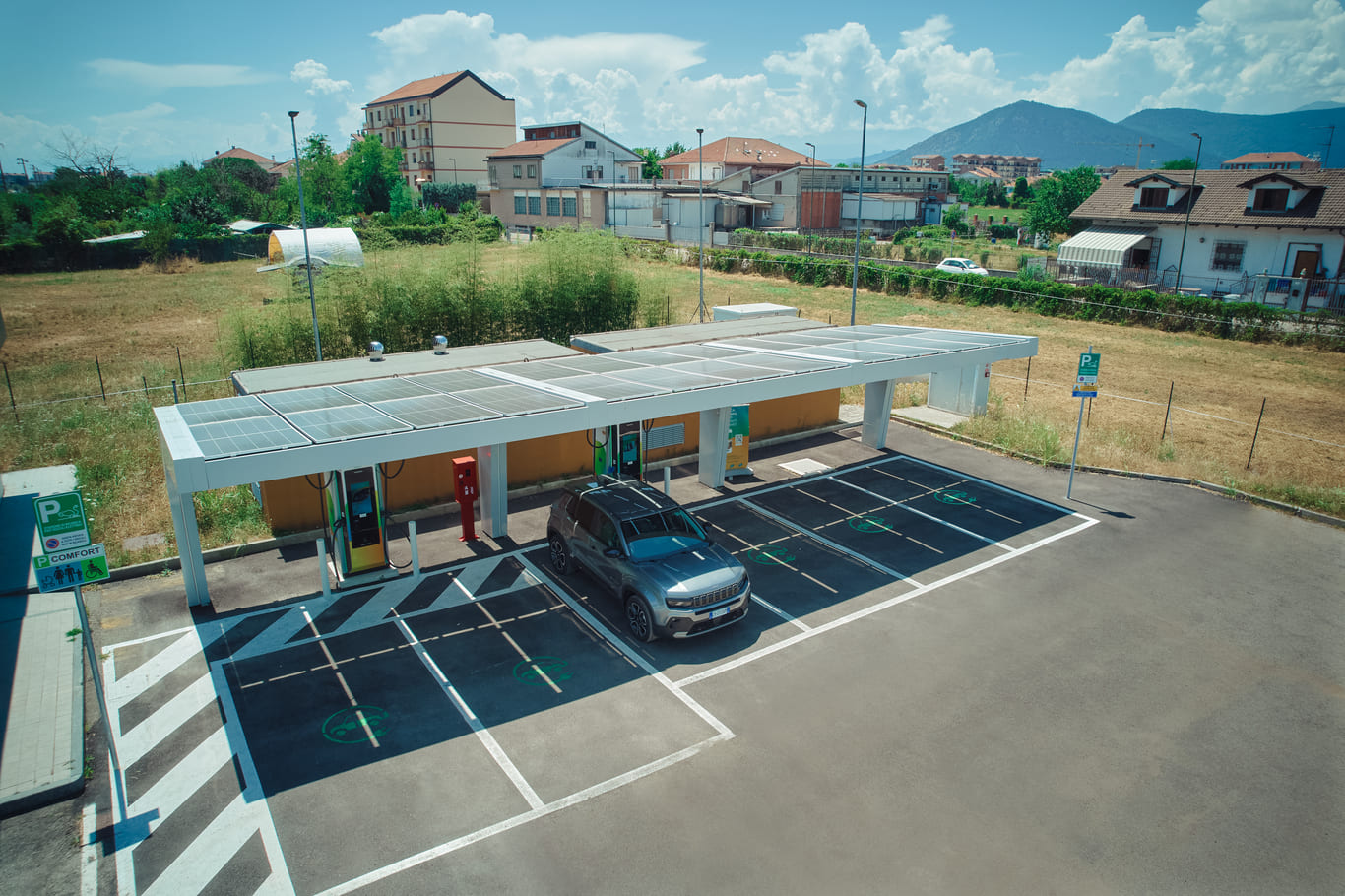
Reducing the environmental impact of electric cars in Italy by using clean energy sources
With an energy mix in which the share of renewable energy is constantly growing, Italy is an environment conducive to the electrification of transport. Thanks to this gradual shift in electricity generation, the debate surrounding electric car pollution now has clear and reassuring answers: there are no exhaust emissions, whilst those associated with generating the energy required for recharging are falling year by year.
The integration of smart home charging and private solar panels makes it possible to use self-generated solar energy for everyday travel. The availability of public charging infrastructure powered by renewable energy completes this model, providing a solution even away from home. Both approaches help reduce the environmental impact of transport and dependence on fossil fuels, promoting greater use of renewable energy
The environmental impact of electric cars: benefits for urban centres
The large-scale adoption of battery-powered vehicles is leading to a measurable reduction in concentrations of local pollutants, such as fine particulate matter (PM10 and PM2.5) and nitrogen oxides. In metropolitan areas, where traffic density is high, the absence of exhaust pipes helps tangibly improve air quality, improving public health and the liveability of urban spaces. Another important aspect is noise pollution: electric motors are quiet, and thus help reduce background noise in towns and cities, ensuring a quieter urban environment.
Engineering efficiency is another advantage of this technology. The electric motor has an energy efficiency of around 90%, and is also able to recover some of the kinetic energy through regenerative braking. This system partially recharges the battery during deceleration, optimising fuel consumption and reducing wear and tear on the braking system, meaning a further reduction in the emission of particulate matter into the air.
Pollution: electric cars vs petrol cars
A rigorous analysis based on Life Cycle Assessment provides clear data that compare pollution from electric cars and petrol cars. An analysis of the entire life cycle – comprising raw material sourcing, vehicle production, use on the road and end-of-life disposal – shows a clearly positive balance in favour of battery-powered vehicles. Although the initial production of an electric car requires more energy than for a conventional car, this difference is quickly offset by the absence of emissions during use.
Once the break-even point in terms of kilometres has been reached, the electric vehicle guarantees a net reduction in carbon dioxide emissions for the remainder of its useful life, while internal combustion engines lose much of the energy they generate in the form of heat, and their efficiency rarely exceeds 35%. The data clearly confirm that, when we compare the pollution levels of an electric car with those of a petrol car, electrification is the most logical and effective way to achieve carbon neutrality in the transport sector.
The circular economy and component management
One of the most important technical aspects of zero-emission mobility regards the design and longevity of batteries. Modern lithium-ion batteries are designed to retain a high charging capacity for hundreds of thousands of kilometres, often exceeding the service life of the vehicle itself. The environmental benefits continue even when the battery is no longer able to deliver optimal performance for powering a car.
Before being sent for recycling, the batteries are used in “second life” applications, namely as stationary energy storage systems. At this stage, modules taken from end-of-life vehicles are assembled to store the energy generated by solar or wind farms, or to be used as uninterruptible power supplies for large-scale civil and industrial infrastructure. This extension of the product’s life cycle maximises the initial energy investment.
Current technologies for disposing of electric car batteries
At the end of their operational life, material recovery becomes a key, well-established process. The recycling industry has implemented advanced industrial methods that ensure safe solutions for disposing of electric car batteries. This operation is fully in line with the principles of the circular economy, transforming potential waste into a strategic resource with high added value.
Using techniques such as hydrometallurgy, specialised facilities are able to recycle electric car batteries, recovering over 95% of the critical metals contained within the cells, such as lithium, cobalt, nickel, manganese and copper. These materials, restored to a level of purity comparable to that of virgin material, are fed directly back into the production chain for the manufacture of new batteries. This “urban mining” significantly reduces dependence on traditional mining activities, effectively dispelling any remaining doubts about electric car pollution generated during the industrial production of the components.
The evolution of the charging infrastructure
Another key factor in the success of this transition is the development of the charging infrastructure. Across the country, we are seeing a rapid roll-out of high-power charging points and advanced charging services along motorway networks and major out-of-town roads, as well as a widespread network of alternating current charging points in urban areas. This constantly expanding network reliably allows users to plan long-distance journeys with complete peace of mind.
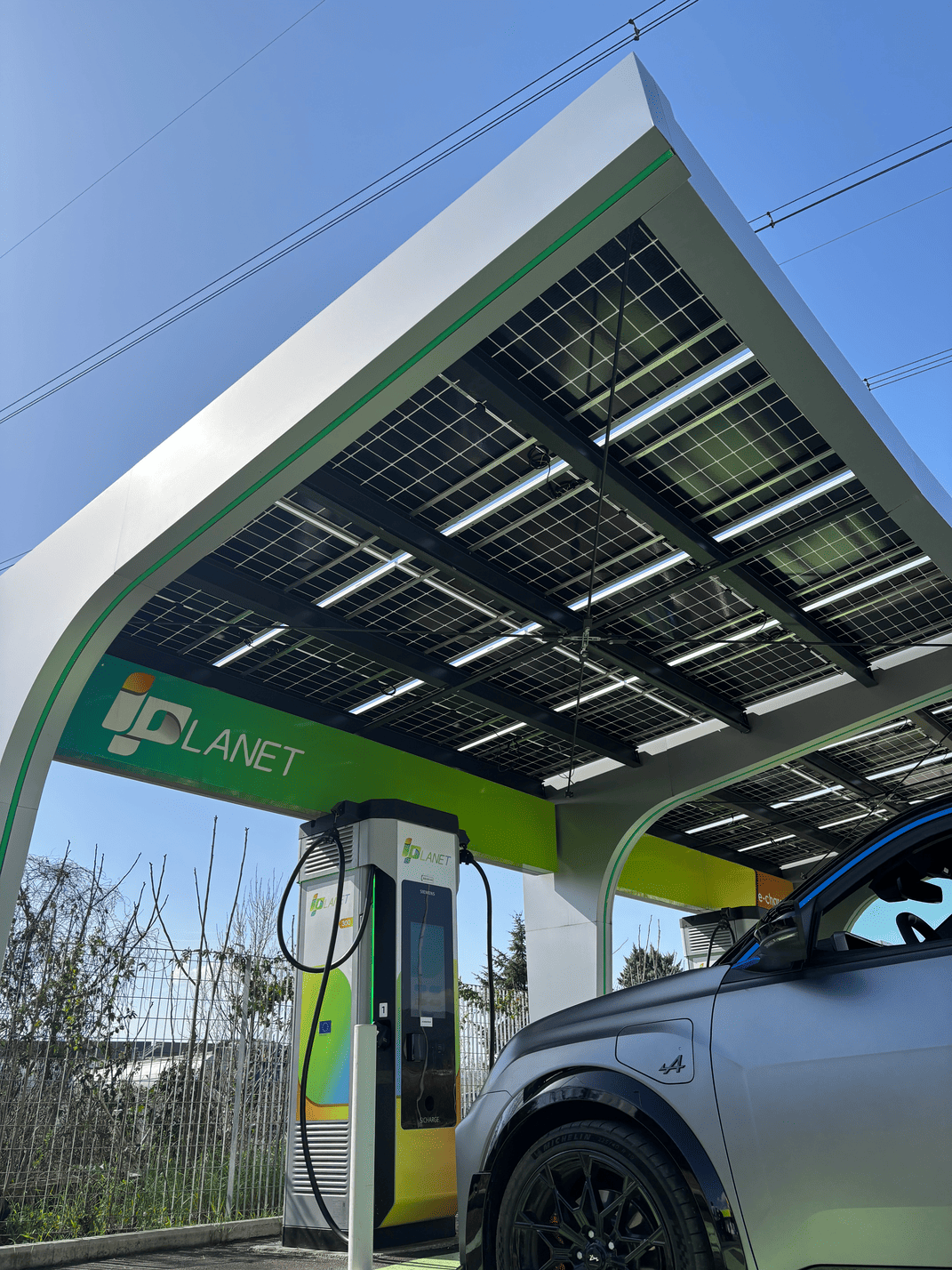
A further engineering advancement is the installation of charging stations fitted with solar canopies and local energy storage systems. This infrastructure takes the pressure off the main electricity grid and ensures that the energy supplied to vehicles is completely clean. A prime example is undoubtedly IPlanet, which certifies that all the energy supplied by its ultra-fast charging infrastructure is 100% renewable. It has received a Cancellation Statement from the Energy Services Operator (GSE) confirming the cancellation of 260 Guarantees of Origin, equivalent to 260 MWh of renewable energy used.
Prospects for structured and informed mobility
The decarbonisation of the automotive sector is moving forward, thanks to continuous innovation and ongoing technological development. Close monitoring of the environmental impact of electric cars in Italy confirms that the course of action taken is yielding tangible results in terms of reducing climate-changing emissions and improving public health.
A successful combination of highly efficient motors, the integration of renewable energy sources and a robust recycling chain demonstrates that the mobility of the future is built on a solid technical footing. By moving away from its reliance on fossil fuels, the automotive industry is setting new standards for sustainability, providing users with effective and eco-friendly transport solutions.
Read also
Information is energy for the mind. Explore articles, offers, and news dedicated to the world of electric mobility and stay up-to-date on everything IPlanet.

Download our App
Did you know? Keep everything under control with IPlanet. Find easily your nearest stations, start charging, monitor your consumption in real time and manage your payments. Electric mobility has never been so easy.
Find out more
Electric mobility, everywhere.
IPlanet offers you a complete ecosystem of online and offline services to simplify travel. EV charging points, traditional fuel pumps and refreshment areas: every last detail has been designed to guarantee you a complete experience. Control everything at a click on our App and website!
Find our more
Iplanet. The ultrafast solution to your charging needs

Find your nearest charging point
Use our ultrafast charging points and dedicate more time to the things you love.

Pay directly from the App
Start charging from your smartphone to save time and money

Benefits and deals
Follow our channels to discover more promotions just for you.
Our Energy
is 100% Renewable
IPlanet certifies the origin of all the energy supplied by its ultra-fast charging stations. In 2024, we received a Cancellation Statement from the Energy Services Manager (GSE), confirming the cancellation of 260 Guarantees of Origin, equivalent to 260 MWh of renewable energy used.
