
Magazine
Electric cars and running costs: how to optimise efficiency and cut costs
The shift towards more environmentally friendly mobility is, without a doubt, one of the most fascinating technological and social challenges we are experiencing. But when it comes to transport, we need to keep an eye on our wallets too. Balancing sustainability with costs is one of the new priorities for motorists, and is probably one of the most important challenges facing the electric vehicle sector. And when it comes to costs, it goes without saying that consumption is a factor.
The purchase of a new battery-powered vehicle requires a shift in our driving mindset, away from all our old habits associated with traditional internal combustion engines. Once you have a thorough understanding of the many factors that influence your vehicle’s energy requirement, you can travel with complete peace of mind and significantly extend the full range available. Every aspect of driving, from simply pressing the accelerator pedal to the continuous use of the air conditioning, has a decisive impact on how much we spend a month on energy. For some time now, the Ministry has been promoting intensive awareness-raising campaigns and widespread information initiatives designed to educate the public on how to make an increasingly rational use of the energy resources available throughout the country. This major green revolution does not rely solely on leading-edge engineering technology. It is also, and most importantly, based on responsible and mindful behaviour on the part of drivers all year round. Personal awareness and a renewed focus on road safety education are of inestimable value today in reducing unnecessary energy wastage and promoting a healthier environment for everyone.
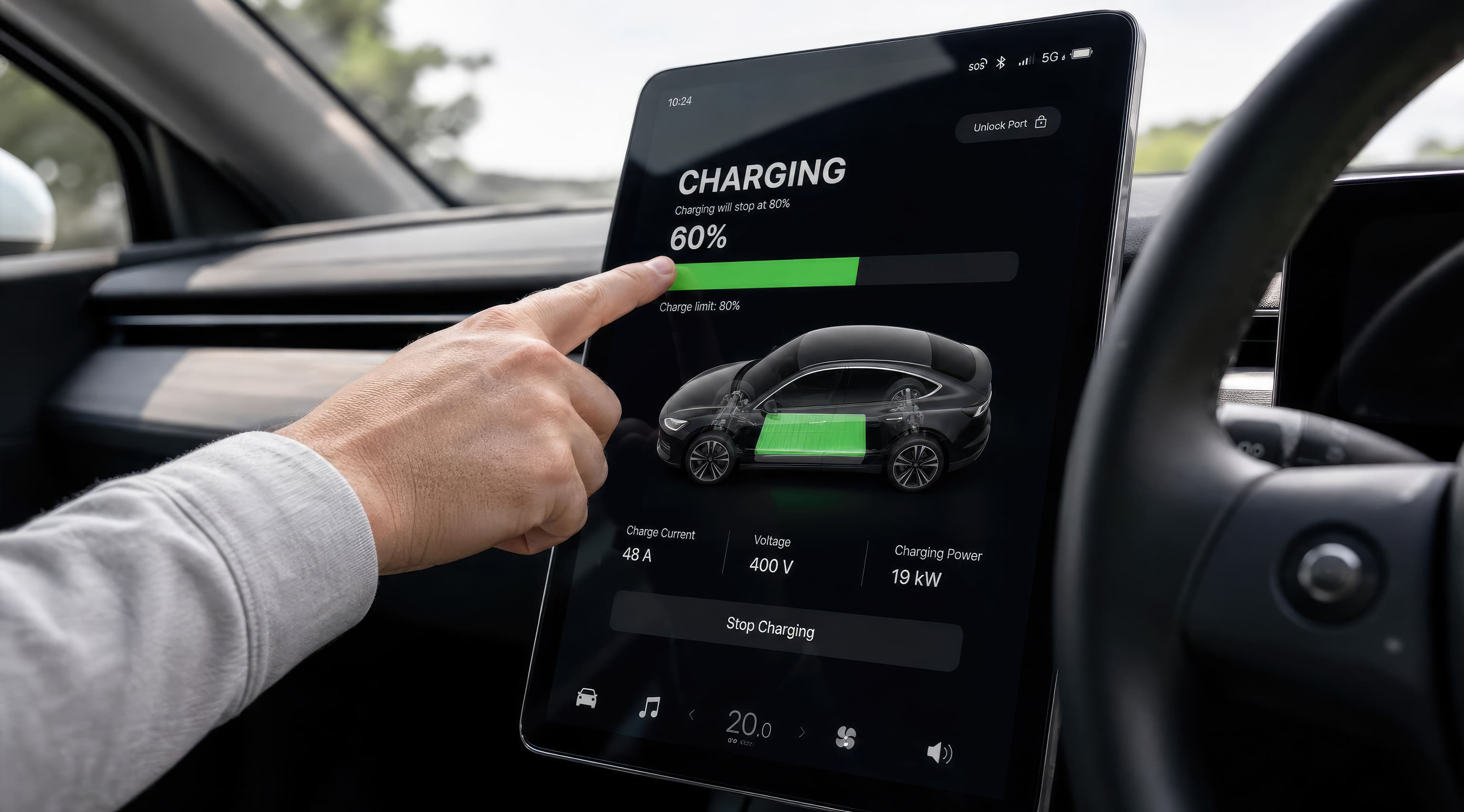
Driving strategies to improve performance, fuel economy and long-distance travel with an electric car
Adopting and maintaining a smooth, distinctly anticipatory driving style is key to achieving immediate, noticeable energy savings. Sudden acceleration in urban areas and abrupt braking waste a huge amount of valuable energy that could be conserved to extend the journeys we have planned. Making the most of regenerative braking enables the vehicle to recover much of the kinetic energy that would otherwise be lost, instantly converting it back into usable charge for the main battery of the car. Looking ahead and anticipating the actions of other drivers and the changing traffic conditions around you helps to maintain an incredibly steady cruising speed, avoiding unnecessary, wasteful and sudden changes in pace. Another crucial factor in this innovative scenario is careful management of top speed, particularly during long, monotonous motorway journeys. Unfortunately, consistently travelling at speeds of over 110 kilometres an hour inevitably results in an exponential increase in aerodynamic drag, requiring the quiet motor to expend significantly more energy than it does at city speeds. Maintaining a moderate, steady pace allows for perfect stabilisation of the electric car’s energy consumption per 100 km at levels established as ideal by the manufacturer. Heavy use of heating or air conditioning in the vehicle also significantly impacts the charge stored in the battery, especially during the coldest or the hottest, most humid months of the year. Pre-conditioning the car interior in advance, while it is still physically connected to a home or public charging point, is a very smart strategy to allow you to set off in comfort with the ideal temperature, without affecting the remaining range in any way before you even start driving. Checking tyre pressure regularly helps significantly reduce rolling resistance, further optimising the smoothness of the ride on any type of urban tarmac or uneven country roads. The weight of the load carried in the boot also has a direct impact on driving dynamics, so it is always highly advisable to remove unnecessary weight and cumbersome external accessories, such as large roof boxes, when they are not strictly necessary for the journey.
Electric versus petrol: direct comparison of everyday consumption on the road
A thorough analysis of the obvious differences compared with the traditional systems helps everyone to understand the real, indisputable benefits of the energy transition currently under way. The modern zero-emission engine converts the vast majority of the energy stored into pure, linear motion, drastically reducing inefficiencies and harmful heat loss. A close look at the comparative data on electric versus petrol car consumption immediately shows that the antiquated internal combustion engine wastes an incredible 70% of the energy it produces, in the form of excess heat and mechanical friction. This indisputably demonstrates that the overall efficiency of a battery-powered vehicle is superior across the board, allowing us all to make a more logical, rational and carefully measured use of the world’s precious resources. In the chaos of city traffic, where the exasperatingly frequent stops and starts at traffic lights takes a huge toll on conventional cars, modern battery-powered vehicles excel thanks to their remarkable natural ability to recover energy during deceleration. Driving at full throttle through congested city traffic thus becomes not only surprisingly relaxing and quiet, but also extremely convenient and cost-effective for families. The increasingly widespread awareness of this undeniable technical superiority is prompting more and more forward-thinking families to choose eco-friendly solutions, and to make a gradual, definitive move away from traditional, polluting petrol stations.
Advanced methods for calculating electric car energy consumption and journey management
To tackle very long-distance journeys with absolute peace of mind, it’s important to learn how to make the most of a few very useful, intuitive technological assessment tools. A thorough calculation of an electric car’s energy consumption in advance needs to take account of a number of environmental variables. These include the outside temperature, the complex elevation profile of the route planned and the specific driving style of the person at the wheel. Modern, state-of-the-art in-car digital displays now provide extremely accurate real-time estimates, but the practical experience of the driver remains essential for accurately interpreting and contextualising the valuable data provided by the on-board computer. Knowing exactly in advance how much energy you’ll be using, based on the constantly changing road conditions, allows you to plan your charging stops with extreme precision, with no unnecessary anxiety about your range running out. Many new users soon discover that the electric car’s energy consumption per 100 km varies considerably between smooth winter driving and summer driving, due to the significant amount of energy required to actively heat or effectively cool the complex chemical cells of the battery and the spacious passenger compartment. Learning to deal wisely with these unavoidable seasonal fluctuations is part of the normal, exciting process of adapting to this revolutionary new form of road transport. Sophisticated digital tools and dedicated apps support users daily, providing highly reliable journey forecasts and proactively suggesting the best and most strategically appropriate times to top up their vital energy along their pre-planned route. The crucial importance of ongoing education in aerodynamic and mechanical efficiency will inevitably have an extremely positive impact on monthly running costs, magically turning each journey into a fantastic opportunity for real financial savings.
Analysis of electric versus diesel consumption for frequent travellers
Drivers accustomed to covering huge, tiring distances for work often instinctively compare the latest cutting-edge technologies with the classic, noisy diesel engines, which have always been valued for their excellent performance on very long journeys. However, when we objectively and carefully assess the fuel consumption of electric cars compared with diesel cars, a very interesting overall picture emerges, with a range of nuance that may come as a surprise to newcomers to the sector. Although diesel still offers a certain degree of inherent efficiency on the motorway, the running cost of electric cars – particularly when charged regularly at home overnight or with specific subscriptions at subsidised rates – is, in the vast majority of cases, significantly and pleasantly lower per kilometre travelled. A thorough, rigorous analysis of maintenance costs – both routine and non-routine, which prove to be very low for zero-emission vehicles – further reinforces their overwhelming long-term cost-effectiveness. A proper comparative analysis of the running costs of an electric car compared with a petrol car – as well as the now obsolete diesel alternatives – clearly shows that there are effective economic benefits over the entire life cycle of the vehicle purchased, and not just for a single, occasional top-up of energy or fuel. In addition, in every country, diesel engines are increasingly subject to extremely strict traffic restrictions in fragile city centres, effectively making quiet, modern cars the only truly logical and forward-looking choice for those who need to be able to travel freely, without bureaucratic constraints. The continuous and unstoppable chemical evolution of batteries and sophisticated integrated thermal management systems is very rapidly closing the supposed gap over long distances, making the technological comparison increasingly one-sided in favour of brilliant, advanced eco-friendly solutions.
The role of the IPlanet network in managing electric cars, energy consumption and charging costs
The public supply infrastructure across the country has always played a pivotal role in the overall day-to-day experience of users and in determining ultimate energy expenditure. Choosing wisely where – and above all how – to recharge electric vehicles has a significant impact on the monthly spend of any informed, careful motorist. Placing complete trust in specialist operators that consistently offer transparent pricing and state-of-the-art delivery technologies is essential to effectively keep running costs under control over the years. The extensive infrastructure network recently developed by IPlanet has entered the market with precisely this ambitious and commendable aim, providing ultra-high-power charging stations all over the country and always easily accessible to all users on the move. This state-of-the-art integrated technological system enables constant monitoring and optimisation of the delicate chemical charging process, offering a wide range of solutions tailored to every individual’s specific daily mobility needs. Convenient digital services allow drivers to plan their energy top-ups in advance, making smart use of the most cost-effective time slots and carefully avoiding the lengthy peaks of congestion on the public grid.
Put simply, a constant, meticulous eye on the “electric car consumption” parameter gives a precise, constant picture of how much you are spending on every single kilowatt-hour stored in the vehicle’s high-capacity battery. Modern, responsive mobile apps can be used to calculate the energy consumption of an electric car in a flash directly from your phone, magically combining raw journey data with charging costs updated in real time. These accurate, practical tools allow drivers to assess the significant financial benefits, with a rigorous analysis of the consumption of electric cars versus diesel cars or a direct comparison of the two for each specific, planned journey undertaken during a busy working week. The group’s forward-looking corporate vision focuses not only on the supply of electricity, but above all on providing genuine, ongoing support to gently guide customers towards complete, rewarding environmental and economic sustainability in the long term. Actively promoting overall efficiency is therefore by no means limited to technological improvements to the vehicles themselves; it applies to the entire complex energy management ecosystem inextricably linked to those improvements. The powerful next-generation charging points are perfectly able to communicate directly with the vehicle, dynamically adjusting the power output to fully preserve the chemical health of the battery and minimise the inevitable heat dissipation during the delicate and rapid transfer of energy. This commendable, modern, comprehensive and systematic approach mathematically ensures that every single long-distance journey actively contributes to building a significantly cleaner future, while keeping operating costs extremely low and perfectly predictable over time. Embracing this brilliant new world of zero emissions undoubtedly requires a little initial study and genuine dedication, but the enormous benefits in terms of unrivalled comfort, absolute silence and tangible financial savings more than make up for the mental effort required, right from the very first weeks of exhilarating use on the road.
Read also
Information is energy for the mind. Explore articles, offers, and news dedicated to the world of electric mobility and stay up-to-date on everything IPlanet.
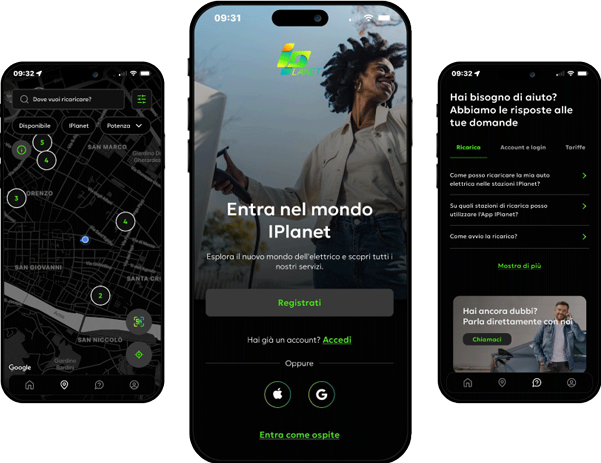
Download our App
Did you know? Keep everything under control with IPlanet. Find easily your nearest stations, start charging, monitor your consumption in real time and manage your payments. Electric mobility has never been so easy.
Find out more
Electric mobility, everywhere.
IPlanet offers you a complete ecosystem of online and offline services to simplify travel. EV charging points, traditional fuel pumps and refreshment areas: every last detail has been designed to guarantee you a complete experience. Control everything at a click on our App and website!
Find our more
Iplanet. The ultrafast solution to your charging needs

Find your nearest charging point
Use our ultrafast charging points and dedicate more time to the things you love.

Pay directly from the App
Start charging from your smartphone to save time and money
Benefits and deals
Follow our channels to discover more promotions just for you.
Our Energy
is 100% Renewable
IPlanet certifies the origin of all the energy supplied by its ultra-fast charging stations. In 2024, we received a Cancellation Statement from the Energy Services Manager (GSE), confirming the cancellation of 260 Guarantees of Origin, equivalent to 260 MWh of renewable energy used.
