
Magazine
The differences between hybrid and electric cars
The automotive market is undergoing the most important technological and cultural revolution since its inception. Until just over a decade ago, the options were essentially limited to two traditional choices: petrol or diesel engines, with the occasional presence of CNG or LPG vehicles. Today, driven by stringent European regulations and growing environmental awareness, manufacturers are offering completely new technologies. In this context, understanding the difference between hybrid and electric cars has become an absolute priority for anyone preparing to change their vehicle.
It is no longer a niche reserved for technology enthusiasts. Choosing an electric or hybrid car is a complex decision that will influence your lifestyle, your family budget for years to come and your daily habits. In this extensive and detailed guide, we will explore every technical, economic and practical aspect in depth, clearing up doubts and correcting the most common misconceptions.
How hybrid and electric cars work
To fully understand the modern mobility landscape and grasp the difference between hybrid and electric, we need to lift the bonnet and analyse the mechanics and engineering philosophy behind these two worlds.
Electric cars
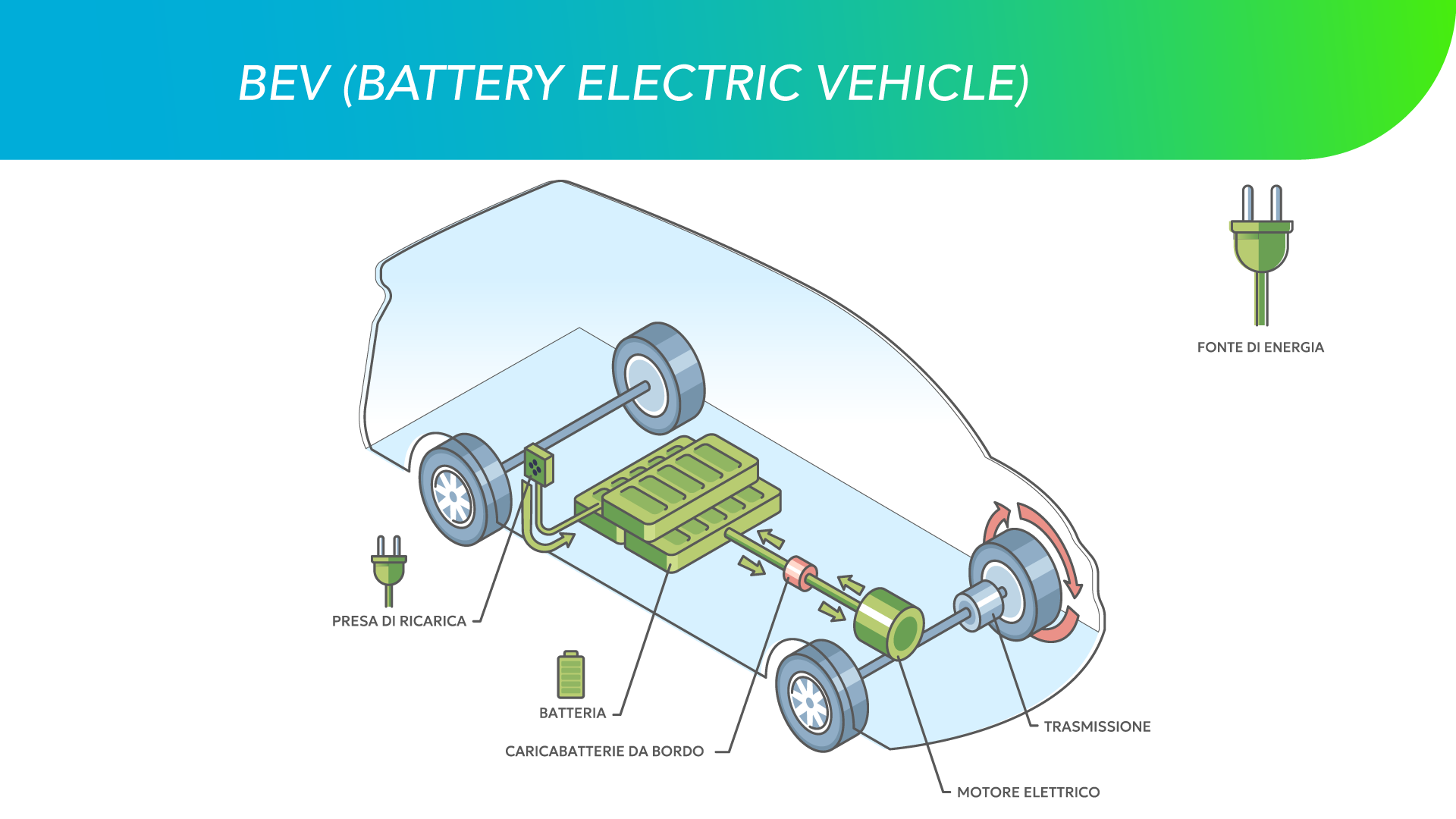
Battery electric vehicles, technically defined as BEVs (Battery Electric Vehicles), represent local zero-emission mobility in its purest and most radical form. These cars are completely without an internal combustion engine. There are no cylinders, pistons, fuel tanks or exhaust pipes.
Their propulsion system consists solely of one or more electric motors, usually positioned on the wheel axles, powered by a large battery pack, generally lithium-ion. The battery pack is installed in the car’s floor, a design choice that significantly lowers the vehicle’s centre of gravity, improving roadholding and safety. The energy required for movement is drawn exclusively from the external power grid and stored in the accumulators. The main engineering advantage of a BEV lies in its extraordinary mechanical simplicity: with very few moving parts, wear and tear and the risk of complex failures are drastically reduced.
Hybrid cars
The hybrid ecosystem, on the other hand, is based on the coexistence of two worlds. Hybrid cars combine a thermal and an electric energy source. There are different degrees of electrification, such as Mild Hybrid or Full Hybrid, where the traditional internal combustion engine works in close synergy with a supporting electric motor to varying extents. In Full Hybrid models, the battery is small and recharges itself using kinetic energy recovered during deceleration and braking. The electric motor supports the combustion engine during higher-demand phases, such as starting and overtaking, and allows short urban stretches to be driven with zero emissions.
The difference between BEV and Plug-In
It is crucial to clearly define the line between pure electric vehicles (BEVs) and rechargeable hybrids, or Plug-ins. A Plug-in car has a medium-sized battery pack: significantly larger than that of a standard hybrid, but considerably smaller than that of a BEV. The defining feature of a Plug-in is the presence of a “plug”: just like a fully electric car, a Plug-in must be connected to a socket or a charging station to recharge its battery.
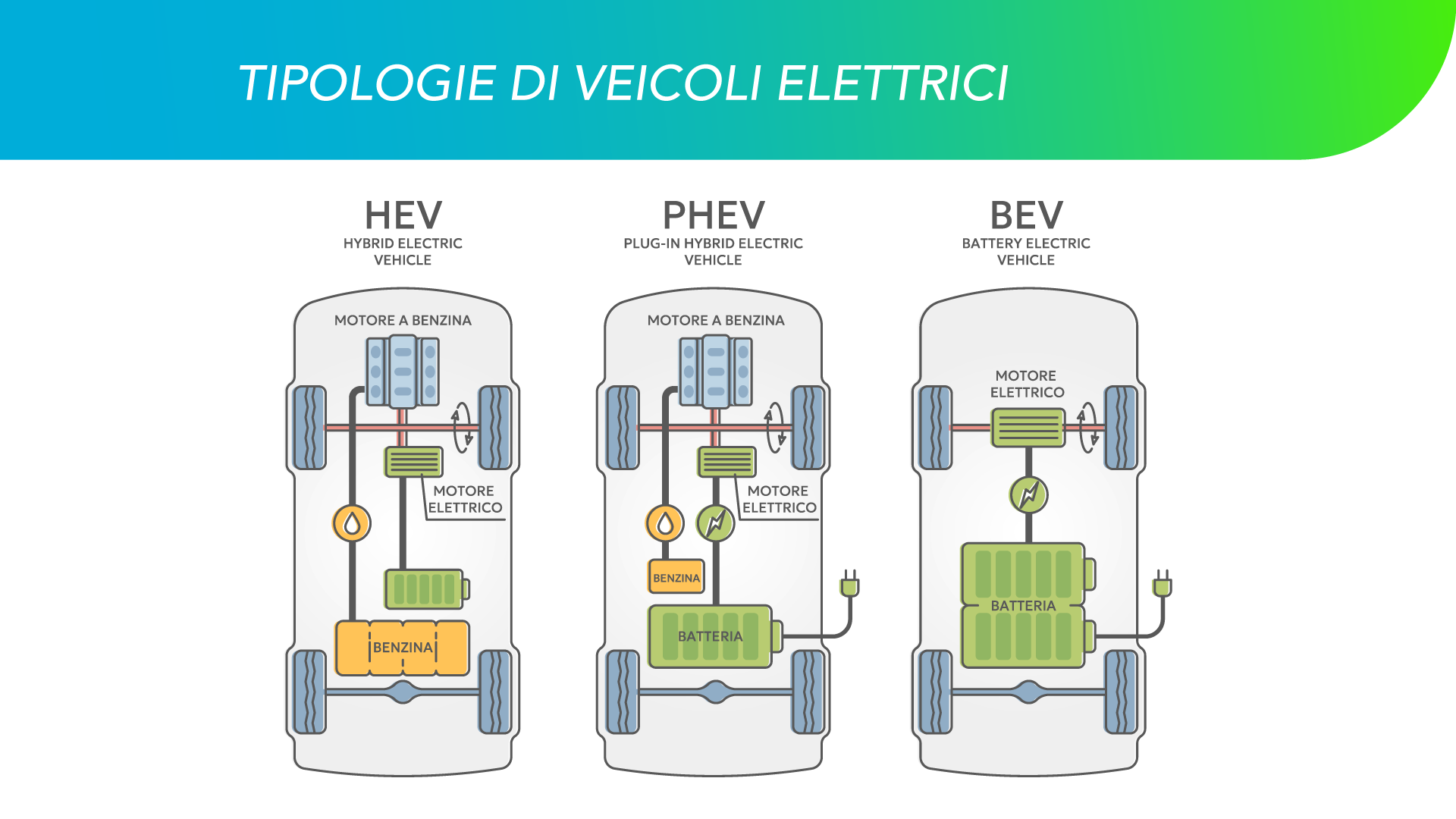
This architecture allows Plug-in cars to travel in 100% electric mode for considerable distances, usually between 40 and 80 kilometres. Once the battery charge is depleted, the major difference compared to fully electric vehicles becomes clear: the Plug-in activates its internal combustion engine and continues the journey like a conventional hybrid, completely eliminating the risk of being stranded. BEVs, being fully electric, do not have an “emergency” thermal engine; once discharged, they must necessarily rely on a charging point.
Advantages in sustainability and environmental impact
When the debate shifts to the sensitive topic of ecology, the difference between hybrid and electric becomes particularly evident, although both technologies offer undeniable benefits compared to outdated internal combustion vehicles. Consciously deciding whether to purchase an electric or hybrid car means reflecting not only on vehicle efficiency, but on the entire environmental ecosystem.
100% electric cars offer an absolute advantage in urban centres. They generate no exhaust emissions. They do not produce carbon dioxide, nitrogen oxides or fine particulate matter such as PM10 and PM2.5 resulting from fossil fuel combustion. In terms of local emissions, driving an electric vehicle actively contributes to improving the air we breathe in cities. Naturally, the real environmental impact on a global scale depends on a country’s “energy mix”, meaning how the electricity used for charging is generated – renewable sources versus coal or gas – but the global trend is moving towards increasingly greener grids.
On the other hand, understanding the difference between hybrid and electric from an environmental perspective requires analysing their mixed usage cycle. A hybrid car, especially when driven predominantly in chaotic urban traffic, excels at reducing waste. By switching off the combustion engine at traffic lights or in slow-moving traffic and recovering energy during braking, it drastically reduces city emissions. However, as speeds increase (for example, on main roads or motorways), the combustion engine becomes the primary source of propulsion, and the car resumes burning fossil fuel and emitting exhaust gases.
Running costs and savings
The wallet has always been the ultimate judge when choosing a vehicle. Analysing the difference between hybrid and electric through the lens of cost requires long-term thinking: it is necessary to consider the TCO, or total cost of ownership over time, rather than focusing solely on the list price at the dealership.
Routine and extraordinary maintenance
It is in the workshop that the electric vehicle reveals its greatest savings potential. A battery-powered car is incredibly simple. It requires no oil changes, has no fuel filters to replace, no timing belts, complex clutches, spark plugs or exhaust systems prone to rust. Even brake wear is reduced to historic lows: thanks to the regenerative braking of the electric motor, brake pads can last over 100,000 kilometres. By contrast, an electric and petrol hybrid vehicle literally has two separate powertrains. While it benefits from the reliability of the electric system, it must still undergo the rigorous mechanical maintenance required by a traditional combustion engine, keeping servicing costs aligned with those of conventional vehicles.
Fuel costs and taxation
Charging an electric car in your home garage – especially if you benefit from off-peak tariffs or have a photovoltaic system – guarantees an unbeatable cost per 100 kilometres compared to fuel prices at the pump. In addition to these incredible savings, there are also tax benefits. In many regions, BEVs are fully exempt from vehicle tax for the first five years and benefit from reduced rates thereafter. They also enjoy free parking on blue lines and free access to LTZ areas. For hybrids, these benefits vary significantly from one municipality to another and are often more limited.
Range and practicality
Finally, we come to the most significant psychological and logistical hurdle. The last and perhaps most debated aspect of the difference between hybrid and electric directly concerns the vehicle’s practical usability in daily routines, business trips and summer holidays.
The ultimate choice between an electric or hybrid car depends almost entirely on the infrastructure available to you and a realistic assessment of your usual routes. Electric cars offer an unparalleled level of convenience both for home charging and when travelling. While trips can no longer be entirely improvised, they are easy to manage thanks to dedicated apps that allow you to plan stops in advance at Fast or Ultrafast high-power charging stations, factoring in 20 to 40-minute breaks. These stops can be extremely comfortable thanks, for example, to the well-equipped network of IPlanet service stations.
If, instead, we consider the everyday difference between hybrid and electric in terms of freedom of movement and spontaneity, the traditional hybrid offers complete peace of mind, eliminating so-called “range anxiety”. Refuelling an electric and petrol hybrid car takes the classic three minutes at any of the thousands of petrol stations across the country.
Plug-in hybrids position themselves as the perfect bridge for those who are undecided. They allow fuel costs to drop to zero during the working week, covering the home-office commute entirely in electric mode, while retaining the combustion engine to handle long summer weekend trips without having to calculate where, how or for how long to stop for a recharge.
Read also
Information is energy for the mind. Explore articles, offers, and news dedicated to the world of electric mobility and stay up-to-date on everything IPlanet.
Download our App
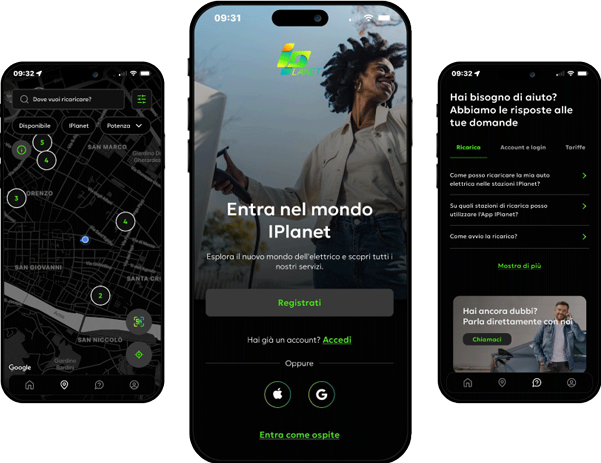
Did you know? Keep everything under control with IPlanet. Find easily your nearest stations, start charging, monitor your consumption in real time and manage your payments. Electric mobility has never been so easy.
Find out more
Electric mobility, everywhere.
IPlanet offers you a complete ecosystem of online and offline services to simplify travel. EV charging points, traditional fuel pumps and refreshment areas: every last detail has been designed to guarantee you a complete experience. Control everything at a click on our App and website!
Find our more
Iplanet. The ultrafast solution to your charging needs

Find your nearest charging point
Use our ultrafast charging points and dedicate more time to the things you love.

Pay directly from the App
Start charging from your smartphone to save time and money
Benefits and deals
Follow our channels to discover more promotions just for you.
Our Energy
is 100% Renewable
IPlanet certifies the origin of all the energy supplied by its ultra-fast charging stations. In 2024, we received a Cancellation Statement from the Energy Services Manager (GSE), confirming the cancellation of 260 Guarantees of Origin, equivalent to 260 MWh of renewable energy used.
