
Magazine
Energy transition and electric mobility towards 2026
The energy transition taking place in Europe is more than just a technological process; it’s a cultural shift, involving citizens, businesses and institutions. On this journey, 2026 will be a key year for the spread of sustainable mobility and the evolution of electric vehicles. The development of smart infrastructures is shaping a new way of getting around, a near future where green mobility will be increasingly widespread, simpler, more affordable and more convenient.
In this scenario, companies such as IPlanet are already contributing to making renewable energy more accessible in everyday life. The integration of home, energy and sustainable means of transport is a decisive element in a change set to have a profound impact on quality of life and the environment.
Prospects for electric mobility in the European Union
In recent years, the European Union has significantly accelerated the evolution of the automotive sector. Emissions regulations, climate targets introduced by the Green Deal, and national incentives are shaping a market increasingly oriented towards electric vehicles, advanced digital systems and sustainable transport.
2026 is expected to see a significant consolidation of e-mobility, due to three main factors. The first is the reduction of car battery costs, the increase in the number of electric models available and the increasingly widespread availability of charging solutions. The European legislative framework governing mobility is very clear and is being updated constantly.
Current policies and main challenges
Despite the progress made, Europe still faces major challenges in making transportation sustainable and effectively usable by everyone. The lack of infrastructure is one of the most significant critical issues: the distribution of charging columns remains uneven, and many areas still do not have adequate facilities to meet the growing demand.
However, EU policies are strongly geared towards the installation of new charging points along major European routes, with common standards and interoperability.
Opportunities and changes for 2026
Looking ahead to this new year, the mobility sector is preparing for a phase of radical renewal. Previews of major international events in the sector point to a marked acceleration on electrification, digitalisation and self-driving technology. Automotive and technology companies are converging towards a model in which the car is set to become a complex, upgradable, connected digital system that is increasingly integrated into the domestic energy ecosystem.
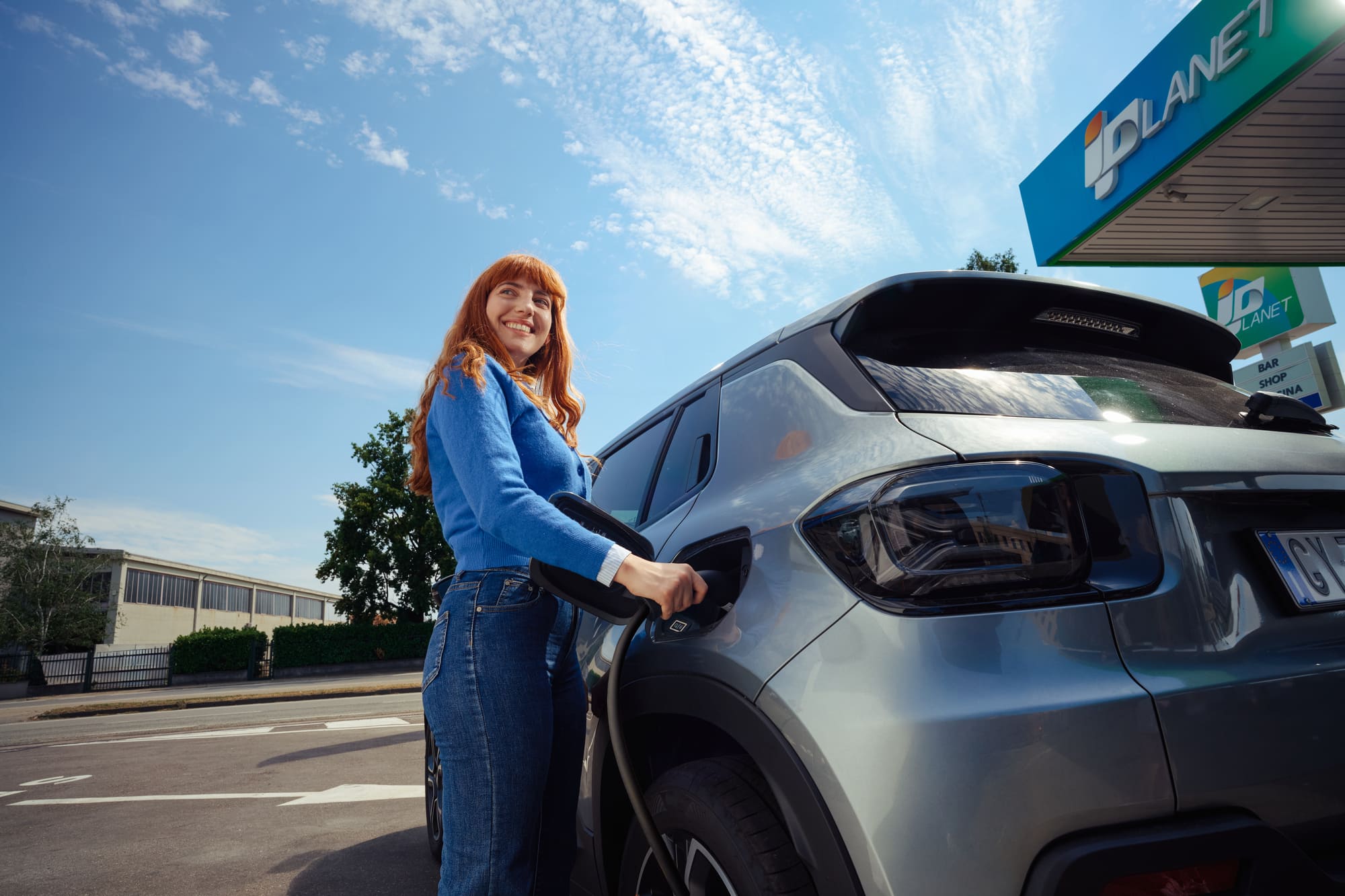
The rise of advanced mobility-oriented technology
One of the most impactful transformations regards the development of vehicles designed “around software”, with digital architectures able to manage advanced functions, OTA updates and customised services. Vehicles will be increasingly electric, intelligent, interconnected and self-drive ready.
The industry is witnessing a rise in the number of advanced mobility platforms: advanced batteries, intelligent sensors, AI-based assisted driving systems and predictive safety platforms.
Electrical concepts and new architectures
Manufacturers are working on various fronts: first and foremost on real digital cockpits designed with next-generation electric concepts and developed using sustainable materials and circular solutions.
These elements are part of a broader vision of green mobility, aimed at reducing environmental impact and creating new driving experiences.
Artificial intelligence as a driver of the new mobility
Artificial intelligence will play a decisive role in redesigning the interaction between humans and vehicles. The most advanced systems will be able to interpret the driver’s gestures and voice with increasing accuracy, closely monitor their condition, and perform predictive maintenance analyses. Assisted driving will evolve towards increasingly autonomous solutions, taking sustainable means of transport to a new level of safety and comfort.
Electrification and next-generation infrastructure
Another pillar of the new mobility is the evolution of the energy infrastructure, which will be upgraded and make recharging easier and more user-friendly. To this end, the network is being expanded through the increasingly widespread installation of ultra-fast charging stations. Another aspect regards the connection with smart homes and smart grids. The synergy between energy and mobility will become ever closer, fostering sustainable mobility that is effectively integrated into the home environment.
Beyond cars: drones, eVTOL aircraft and micromobility
When talking about the mobility of the future, we have to take a look at the aspects regarding all means of transport. Considering cars only may be an obsolete exercise. The scenario that is emerging for 2026 is much broader and more varied, involving solutions that would have seemed science fiction until a few years ago.
One of the most significant innovations regards eVTOL (electric vertical take-off and landing) aircraft, designed to radically transform urban transport. These vehicles, which could be described as a type of large ultralight aircraft that can transport both goods and people, aim to reduce traffic in large cities and create new air mobility corridors, making travel faster and more sustainable.
Alongside eVTOL aircraft, drones are also playing an increasing role, both for cargo transport and in a fully autonomous version. Companies are working on increasingly advanced platforms, able to handle fast deliveries, monitoring infrastructure and offering additional services without impacting the traditional road system. This is a transformation that is expanding the very concept of urban logistics, making it more efficient and sustainability-oriented.
At the same time, the whole micro electric mobility sector continues to grow, encompassing not only e-bikes and e-scooters, but also more advanced solutions designed to integrate technology, safety and low environmental impact, such as microcars. These vehicles are proving fundamental in rethinking daily urban travel, reducing traffic and emissions and offering real alternatives to traditional vehicles, and will have a large market uptake in the next 12 months.
This evolution is also aided by the development of integrated platforms for urban transport management. By connecting sensors, infrastructure, artificial intelligence and digital services, electric cars, public transport, micromobility and light air transport can be coordinated within a single ecosystem. Just think of the many options that already exist for drivers to charge their electric vehicles using Apps and RFID.
The result is a sustainable transport system that is more efficient, accessible and truly oriented towards green mobility: a system in which every citizen will be able to choose the most suitable means of transport while reducing environmental impact. These technologies are defining, and will continue to define, the very concept of sustainable transport, expanding it into a complete, interconnected ecosystem.
Impact of regulatory changes on EU sustainability
Regulatory changes introduced by the European Union are becoming one of the main drivers of the energy transition and are now a decisive factor in determining the speed at which sustainable mobility will take hold across the continent. The progressive restriction of endothermic engines, combined with incentives for electric vehicles and the development of renewable energies, is creating an environment that is pushing the entire transport sector towards a cleaner and more responsible model.
The impact of these policies is already visible: urban areas are beginning to see a gradual reduction in emissions, air quality is improving and the capacity of member states to produce energy from renewable sources is growing.
At the same time, the adoption of sustainable means of transport is steadily increasing, as is interest in green mobility solutions designed to reduce dependence on traditional fuels. Cities are moving more rapidly towards the integration of services and infrastructures designed to favour means of transport that are more compatible with European climate goals, making this change not only desirable, but inevitable.
At the same time, the European Union is promoting industrial models based on circularity: recycled materials, low-impact production processes and energy-efficient technologies are becoming new standards for those operating in the mobility sector.
Read also
Information is energy for the mind. Explore articles, offers, and news dedicated to the world of electric mobility and stay up-to-date on everything IPlanet.
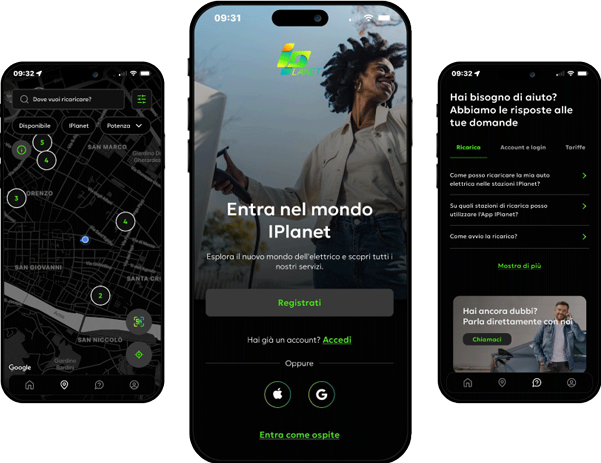
Download our App
Did you know? Keep everything under control with IPlanet. Find easily your nearest stations, start charging, monitor your consumption in real time and manage your payments. Electric mobility has never been so easy.
Find out more
Electric mobility, everywhere.
IPlanet offers you a complete ecosystem of online and offline services to simplify travel. EV charging points, traditional fuel pumps and refreshment areas: every last detail has been designed to guarantee you a complete experience. Control everything at a click on our App and website!
Find our more
Iplanet. The ultrafast solution to your charging needs

Find your nearest charging point
Use our ultrafast charging points and dedicate more time to the things you love.
Pay directly from the App
Start charging from your smartphone to save time and money
Benefits and deals
Follow our channels to discover more promotions just for you.
Our Energy
is 100% Renewable
IPlanet certifies the origin of all the energy supplied by its ultra-fast charging stations. In 2024, we received a Cancellation Statement from the Energy Services Manager (GSE), confirming the cancellation of 260 Guarantees of Origin, equivalent to 260 MWh of renewable energy used.
