
Magazine
Electric car maintenance: how to keep your car running efficiently always
Oil change, particle filter replacement, periodic check of brake fluid levels. How many times have you dealt with these maintenance tasks during the life cycle of your car? Interventions like these are unavoidable if you want to keep your car with a combustion engine efficient and functional. But how does it work for electric cars? It’s not just a matter of changing the method you use to fill up. For those taking their first steps in this ecosystem, the question arises as to how to care for a zero-emission vehicle in the long term. Maintenance of electric cars is an essential step to ensure optimal performance, maximise driving safety and preserve the vital efficiency of the complex high-voltage battery over the years.
This is why it is important to provide a clear and detailed overview of what the care of an electric vehicle involves, which specific components require particular attention and how to plan ahead and efficiently with regard to costs—a crucial aspect especially for those who drive tens of thousands of kilometres a year or use their vehicle predominantly in a chaotic urban environment.
The importance of maintenance for electric cars and the differences compared to thermal engines
The most significant and most obvious difference between taking care of a battery-powered vehicle and a conventional one is the radical simplification of the mechanical structure and the smaller number of components directly subject to wear and tear. When we take a look at maintenance of an electric car compared to a petrol car, one undeniable factor immediately springs to mind: in electric vehicles, there is no engine oil to change, no spark plugs to replace regularly, no fuel filter that can become clogged, no timing belts to change, no complex mechanical clutches, or exhaust systems and silencers prone to corrosion. This directly results in fewer scheduled interventions and much lower day-to-day running costs in general.
Servicing an electric car is therefore a profoundly different, more streamlined operation, focusing mainly on the on-board electronics, software and advanced diagnostics, rather than pure mechanics. It would be a serious error of judgement, however, to think that an electric car does not need any kind of care. To get a clear picture, listed below are the main elements that require specific and rigorous monitoring.
Brake system and brake fluid: Although the brakes wear much more slowly due to regenerative braking, they do require inspection to prevent seizing of the moving parts. Brake fluid must also be replaced periodically, due to its hygroscopic nature.
Battery cooling system: This is the actual circulatory system of the car, containing specific liquids that are essential to ensure the constant performance and durability of the cells over time.
Cabin and passenger compartment filters: These require regular replacements to protect the health of passengers and maintain the efficiency of the integrated heat pump, which has a direct impact on range.
Shared mechanical components: Tyres, suspension, shock absorbers and control arms follow the logical wear principles of conventional cars, sometimes accentuated by the significantly greater weight due to the battery modules.
Battery maintenance and optimisation of battery life
The heart of any zero-emission vehicle—and the most expensive part—is the high-voltage battery pack, usually consisting of thousands of lithium-ion cells. When we compare the maintenance of an electric car with the maintenance of a petrol car, it quickly becomes apparent that obsessive attention to the battery effectively replaces the care that motorists once invested in the delicate combustion engine. Batteries undergo natural and inevitable chemical degradation over the years, but daily driving habits can slow down this process—or indeed dramatically accelerate it.
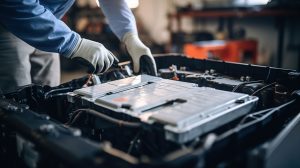
To optimise duration and maximum storage capacity, it is crucial to adopt intelligent and proactive behaviour, by following a few simple golden rules.
Keep the charge between 20% and 80%: During normal daily city use, constantly reaching the maximum capacity of 100% or frequently falling below the critical threshold of 10% puts excessive chemical stress on the cells. The full charge should be reserved for the moments immediately preceding a long journey.
Rely on reliable ultra-rapid columns: The Fast and Ultrafast columns are a godsend on the motorway, but for some, the extreme heat generated during the process puts a strain on the cooling system. This is why it is important to use certified charging stations supplied by reliable operators, such as the ultra-fast charging stations of IPlanet.
Take advantage of thermal pre-conditioning: Extreme temperatures are the sworn enemy of lithium. Using the programmed climate control functions while the car is still connected to the Wallbox allows the entire battery pack to be brought to the ideal operating temperature without affecting the remaining range.
The regulations are also adapting to these priorities: during the periodic inspections of the electric car, which follow the classic legal deadlines of four years after first registration and every two years thereafter, the inspectors do not assess non-existent pollutant emissions, but focus instead on the structural integrity of the battery pack and the absence of high-voltage anomalies to certify the safety of the vehicle.
Control and management of the charging system
A fundamental and completely new aspect of living with a battery-powered car regards the charging infrastructure, something that of course doesn’t exist in the world of traditional combustion engines. This vast ecosystem includes the physical socket in the vehicle, the cables, the on-board charger and the Wallbox home station. Painstaking care of this whole system prevents annoying power sags, dangerous overheating or sudden and frustrating interruptions during power supply. First and foremost, this requires regular visual inspection of the cables and connectors. Every day, the charging cables are bent, inadvertently stepped on, dropped on the ground and exposed to the weather. It is therefore imperative to periodically check that there are no cracks or deep cuts in the thick protective rubber sheath, and that the metal pins inside the connector are not oxidised, dirty or bent in the slightest. An imperfect electrical contact inevitably generates high resistance, which in turn leads to abnormal overheating.
Besides the purely hardware aspect, software updates and inverter diagnostics are also crucial. During an electric car service at an authorised workshop, specialised technicians connect the car to the official diagnostic terminals to download and analyse the error logs of the system, and then proceed to install the latest software updates released by the parent company. It should also be emphasised that, during the Electric Car Inspection, the test driver will pay particular attention to ensuring that there are no exposed, loose or visibly damaged orange high-voltage identification cables in the undercarriage of the car, as these would pose a very serious risk.
Maintenance of brakes and regenerative braking system
The advanced engineering of electric vehicles has introduced a radical change in everyday driving style, involving regenerative braking. The simple act of taking the foot off the accelerator pedal causes the powerful electric motor to instantly reverse its flow, turning it into an efficient generator that harnesses the inertia of the car’s mass to produce electrical energy, recharging the battery in real time and visibly slowing down the vehicle.
This convenient dynamic completely overturns the maintenance model of an electric car compared to the maintenance of petrol cars with regard to the hydraulic brake system. The discs and pads only physically intervene in maximum emergency braking or to bring the vehicle to a complete halt in the very last metres. As a result, the consumption of friction material is so minimal that these components can easily last for over a hundred thousand kilometres. However, the lack of constant mechanical use causes new problems, above all oxidation. If not cleaned regularly, the surface of brake discs tends to rust very quickly. In addition, the pistons inside the brake callipers can literally seize due to prolonged inactivity.
To counter this phenomenon, the best practice is to periodically and safely perform some particularly hard braking, by temporarily deactivating the maximum regeneration function, allowing the pads to mechanically clean the brake track.
In the mechanical workshop, the primary focus shifts to the hydraulic fluid, which degrades over time as it absorbs moisture from the air. It is essential to remember that during the rigorous inspection of an electric car, the vehicle is placed exactly like any other on the dynamometer rollers. A brake system that is rusty, weak or asymmetrical will inevitably mean the car fails the ministerial test, no matter how powerful or sophisticated the vehicle’s electronic engine brake may be.
Typical interventions and servicing schedules
To maintain overall efficiency at the highest level, it is indispensable to scrupulously follow a properly structured programme of checks. Zero-emission cars subjected to particularly intense use in towns and cities may require specific care, such as a much more assiduous check of tyre condition. The searing, immediate delivery of engine torque, combined with the constant restarts at city traffic lights and the considerable additional weight accounted for by the battery, accelerates tread wear considerably compared to a thermal car in the same segment.
If we examine the typical service schedules for an electric car service, we can see that although each manufacturer establishes precise mileage intervals in their manuals, there are some practically universal deadlines. Every twelve months, or when the vehicle reaches a mileage of between fifteen thousand and thirty thousand kilometres, the vehicle must undergo an inspection of the braking system, a check of the conventional 12-volt auxiliary battery, the necessary replacement of the interior pollen filter, and a comprehensive software diagnosis. Technicians also carry out a meticulous visual check of liquid levels.
After the first two years of the car’s life, the planned operations become more specific: a complete brake fluid replacement becomes imperative and compulsory, as well as an extremely thorough diagnostic check of the effective condition of the precious high-voltage battery and verification of the integrity of the charging connectors. As the car’s life cycle continues, every four years, coinciding with the vehicle inspection required by law, a significantly more invasive inspection is required, which often ends up with the restoration or complete replacement of the battery dielectric coolant, as well as an extensive and thorough update of the general electronic management system.
Electric car maintenance undoubtedly has less to do with mechanical friction wear, but it does require extremely scrupulous attention to the few yet vital fluids present, and to the complex electronic architecture on board. Strict adherence to the established maintenance schedules not only ensures that the official warranty provided by the parent company remains valid; it is also a firm guarantee that the vehicle remains safe, pleasant to drive and extremely reliable in all conditions in the long term.
Read also
Information is energy for the mind. Explore articles, offers, and news dedicated to the world of electric mobility and stay up-to-date on everything IPlanet.

Download our App
Did you know? Keep everything under control with IPlanet. Find easily your nearest stations, start charging, monitor your consumption in real time and manage your payments. Electric mobility has never been so easy.
Find out more
Electric mobility, everywhere.
IPlanet offers you a complete ecosystem of online and offline services to simplify travel. EV charging points, traditional fuel pumps and refreshment areas: every last detail has been designed to guarantee you a complete experience. Control everything at a click on our App and website!
Find our more
Iplanet. The ultrafast solution to your charging needs

Find your nearest charging point
Use our ultrafast charging points and dedicate more time to the things you love.
Pay directly from the App
Start charging from your smartphone to save time and money
Benefits and deals
Follow our channels to discover more promotions just for you.
Our Energy
is 100% Renewable
IPlanet certifies the origin of all the energy supplied by its ultra-fast charging stations. In 2024, we received a Cancellation Statement from the Energy Services Manager (GSE), confirming the cancellation of 260 Guarantees of Origin, equivalent to 260 MWh of renewable energy used.
